Why tools go missing in busy workshops
In most trade workshops, missing tools are a systems problem before they are a theft problem. Crews are moving fast, jobs change during the day, and gear gets shared between benches, vehicles and site work. If the workshop is running during load-shedding or under time pressure, the first thing to slip is usually the return process.
Common causes include tools being left in pockets, mixed into customer jobs, moved from one bay to another without a note, or loaned out with no return date. In coastal areas like Durban and Umhlanga, humidity can add another layer of trouble because tools left lying around rust faster and become harder to identify by condition alone.
Once a workshop accepts “we will find it later” as normal, loss becomes routine. The answer is to make the workshop easier to control than it is to ignore.
Start with a check-out system that people will actually use
A check-out system does not need to be complicated. It needs to be quick, visible and consistent. If a grinder, torque wrench or special driver leaves the storage point, someone must record it. That record can be a manual card, a clipboard list, or a simple digital log, depending on the size of the operation.
- Assign one person per shift to control issue and return.
- Mark each item with a code or number that matches the stock list.
- Record who took it, what time it left and when it came back.
- Use separate rules for site kits, shared workshop tools and consumables.
In a Pinetown workshop we worked with, the biggest change was not the format but the habit. A five minute handover at the start of the morning and a return check before closing reduced “lost” items that were actually just sitting in a technician’s toolbox or vehicle. The staff did not need more supervision, they needed a simple routine that fit the way they already worked.
Use shadow layouts so missing items show up fast
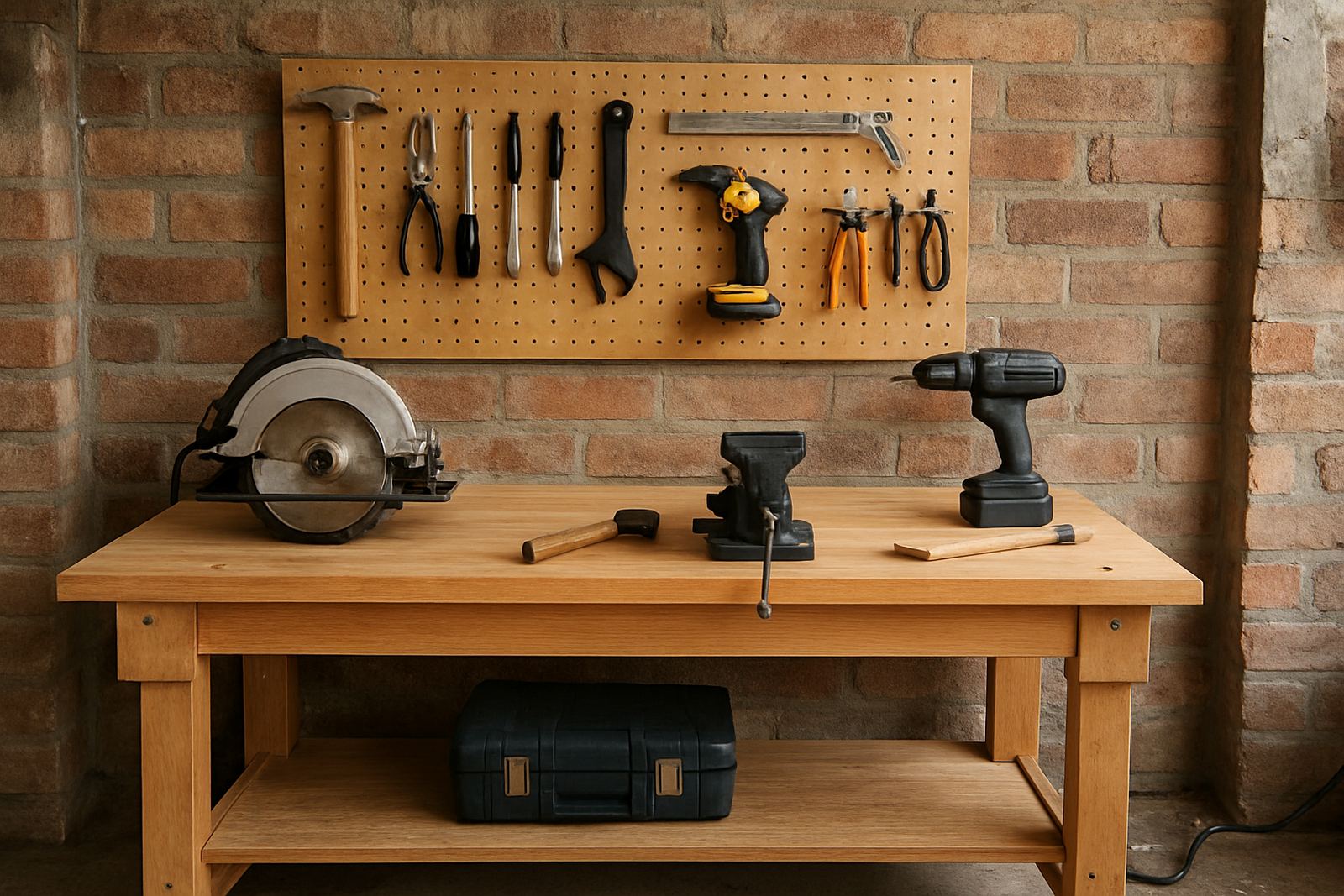
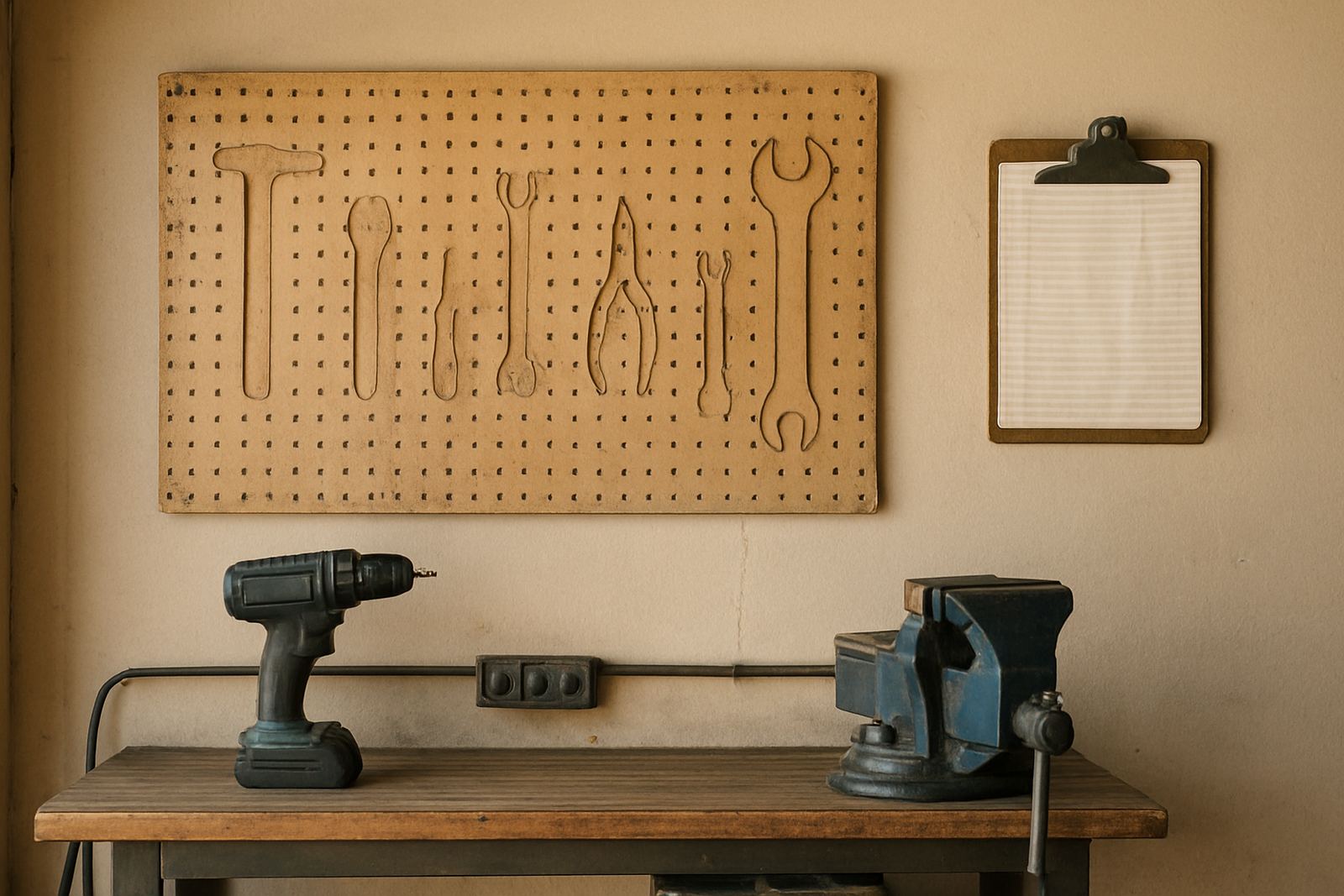
Shadow layouts work because the empty space tells you what is missing. When each wrench, plier, driver bit and measuring tool has a marked position, the team can see gaps at a glance. That speeds up end-of-day checks and makes it much harder for items to drift away unnoticed.
For best results, keep the layout practical. Do not crowd the board with too many small cut-outs if the team is wearing gloves or working in poor light. Larger tools should be grouped by job type, and frequently used items should sit at waist height where they are easy to return.
- Group tools by task, not only by size.
- Use clear labels that can be read in low light.
- Keep one shadow layout for shared workshop tools and another for portable site kits.
- Review the layout after a month and move items that are always being reached for first.
In workshops around New Germany and Westmead, shadow layouts often work best when they are combined with a simple photo sheet. If a new worker joins, they can see exactly where each item goes without guessing or asking five different people.
Accountability is about clarity, not blame
When tools go missing, teams sometimes react by tightening control in a way that slows everyone down. That usually creates resentment and more hiding of mistakes. Better practice is to make responsibility clear from the start. If one technician signs out the item, that person is responsible until it is signed back in or handed over properly.
This does not mean people must be punished for every error. It means the workshop knows where to look first. Accountability also helps when items are damaged rather than lost, because the team can separate fair wear from avoidable misuse.
Good accountability systems usually include the following:
- Named issue and return responsibilities.
- A short daily check at opening and closing.
- A separate note for tools that are off-site overnight.
- A clear process for reporting breakages immediately.
Where the system is fair, people buy in. They know the rules are there to keep the work moving and not to catch someone out on a technicality.
Match the control system to the size of the workshop
A two person service bay does not need the same control method as a larger trade store or fabrication shop. Smaller teams can often manage with a basic register, labelled cabinets and weekly checks. Larger teams need a stronger process with stock codes, issue limits and a proper handover record between shifts.
For starter workshops, it helps to bundle control around the way tools are used. Build one kit for installation work, another for maintenance, and a separate set for measuring and marking. That way, if one kit is out on a job, the rest of the shop can still function without stripping every drawer to find a missing socket.
Trade account customers often ask for replacement matching when an item disappears or fails. That is a good time to review the system as well as the purchase. If a specific cutter or accessory keeps vanishing, it may need a better storage point, a brighter label or a dedicated issue box.
A Durban example: the missing socket set that kept causing delays
A small workshop near Pinetown had one problem every Friday afternoon. The same socket set would be needed for an urgent callout, and every time someone would spend 20 minutes looking for it. The set was not stolen. It was moving between three benches, two vans and a shelf near the compressor, with no record of who last used it.
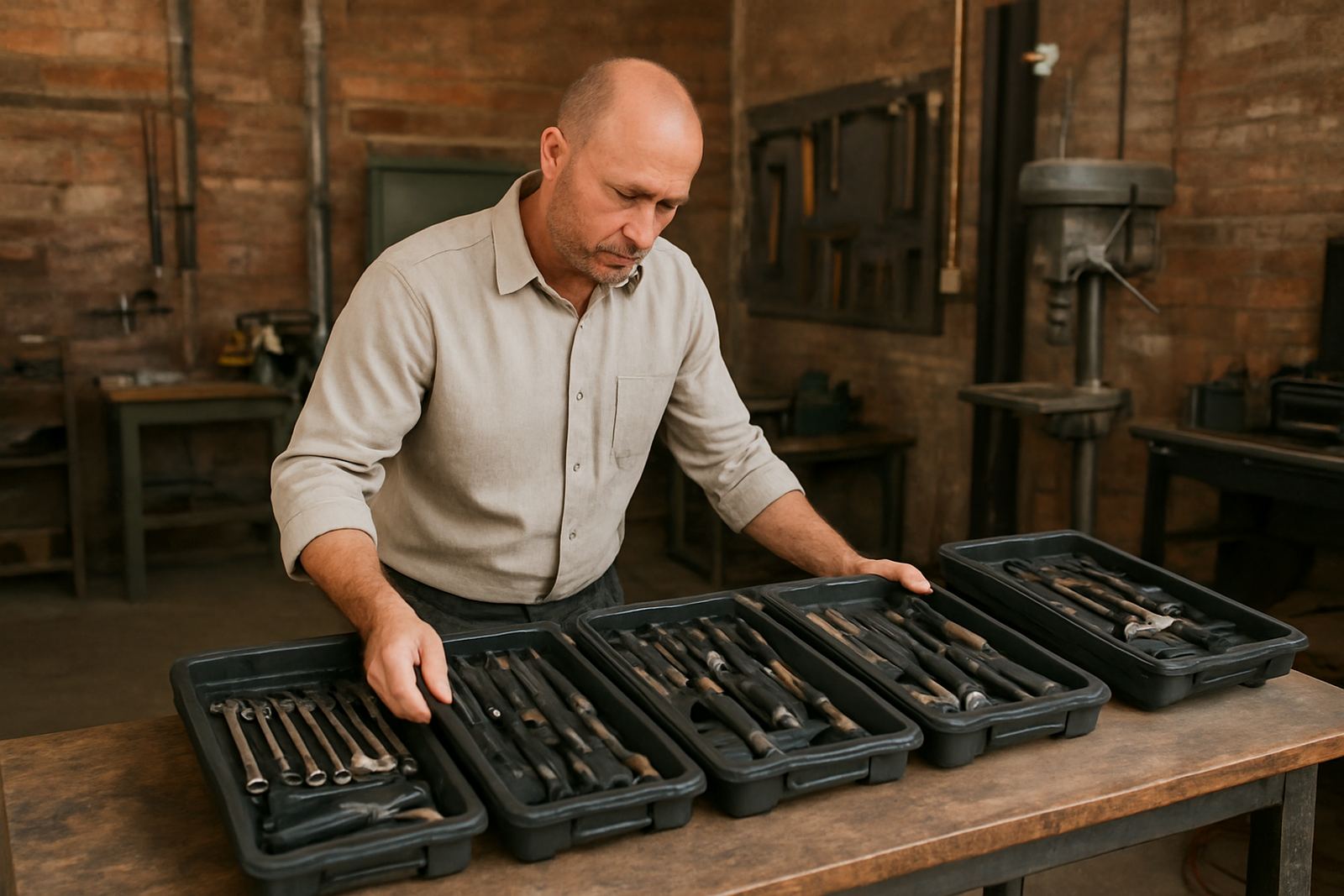
The fix was straightforward. The team put the set into a shadow tray, added a sign-out card and created one return point for the end of the day. They also standardised the kit so that the most-used sizes stayed together and a backup set sat in reserve for busy weeks. Within a month, the Friday searches stopped and the team stopped buying duplicate items out of frustration.
That same workshop later added a short tool induction for new staff. It took less than half an hour, but it removed the awkward first week where people are afraid to ask where things go. Small changes made the place easier to work in, and easier to keep in order.
What to review before you buy more tools
It is easy to replace missing items and move on. But if the control system is weak, the new purchase will likely disappear the same way. Before ordering more stock, review the following points:
- Are tools clearly marked and listed?
- Does every shared item have one storage position?
- Is there a sign-out and sign-in habit on every shift?
- Are consumables being replenished before they run out?
- Do site kits return to the same place every time?
Once those basics are in place, tool loss becomes much easier to manage. The workshop spends less on replacement, staff waste less time searching, and jobs move more smoothly even when the day is interrupted by outages, rain or a last minute customer request.