Why school tool control starts with a simple register
In a school lab, tools go missing for ordinary reasons. Learners share benches, classes change over quickly, and one busy Friday can leave a set of screwdrivers short by Monday morning. A proper issue-and-return register keeps that from becoming a weekly headache.
The best system is not fancy. It is a clear list of what lives in the lab, who took it, when it came back, and what needs repair. That record helps with safety too. If a pair of pliers has loose jaws or a tester has damaged leads, you want that flagged before the next lesson. In technical classrooms, small gaps become bigger risks very fast.
For schools in Pinetown, Durban North, Umhlanga and nearby areas, this also helps when multiple teachers or assistants use the same store room. One person may think a set is complete while another is already down three items. A register removes the guesswork.
Build issue-and-return routines that learners can follow
Good control depends on routine. Every class should know how tools are collected, counted, used and returned. If learners follow the same steps each time, you reduce breakages and the usual end-of-period rush.
- Issue tools in fixed sets for each group, not from loose piles.
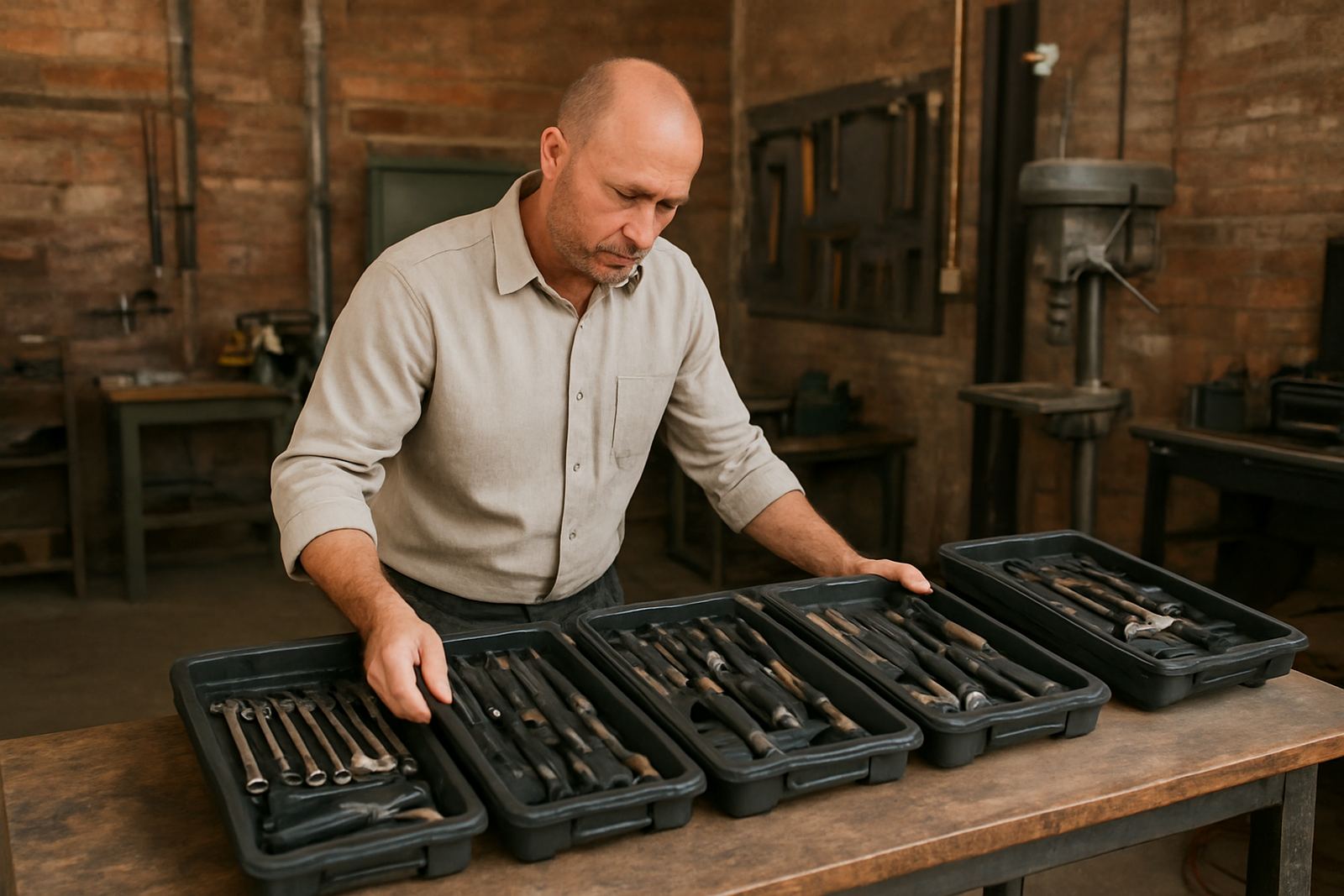
- Mark each set with a number, colour or storage tray so it is easy to spot missing items.
- Count tools out and back in front of the group leader or teacher.
- Separate sharp, electrical and measuring tools from general hand tools.
- Use one return point so items do not end up on random benches or in schoolbags.
A simple rule works well: if a learner signs for a set, that learner signs it back. That does not mean blame, it means clarity. Once pupils understand that the lab runs on responsibility, they usually handle tools with more care. And if something is lost, you know exactly when and where it happened.
Match storage to the realities of coastal schools
In Durban and along the coast, humidity can affect metal tools, steel ruler edges, drill bits and even small fasteners. So storage is not only about order, it is about keeping equipment usable. If tools are packed wet or left in open cupboards, rust appears quicker than most schools expect.
Use dry cupboards, labelled trays and sealed bins for consumables. Keep silica gel or moisture control where needed, and avoid stacking metal on bare concrete shelves. In schools with load-shedding, it helps to keep battery tools and chargers in a separate locked area so they are not left connected after power returns. That small habit saves batteries and reduces confusion.
If your lab is in an older building with limited space, a standardised shelf plan makes a big difference. School store rooms are often shared with science equipment, sports items and broken furniture, so every item needs a proper home. When the layout is fixed, stock checks take minutes instead of hours.
Use starter kits and sets to reduce loss
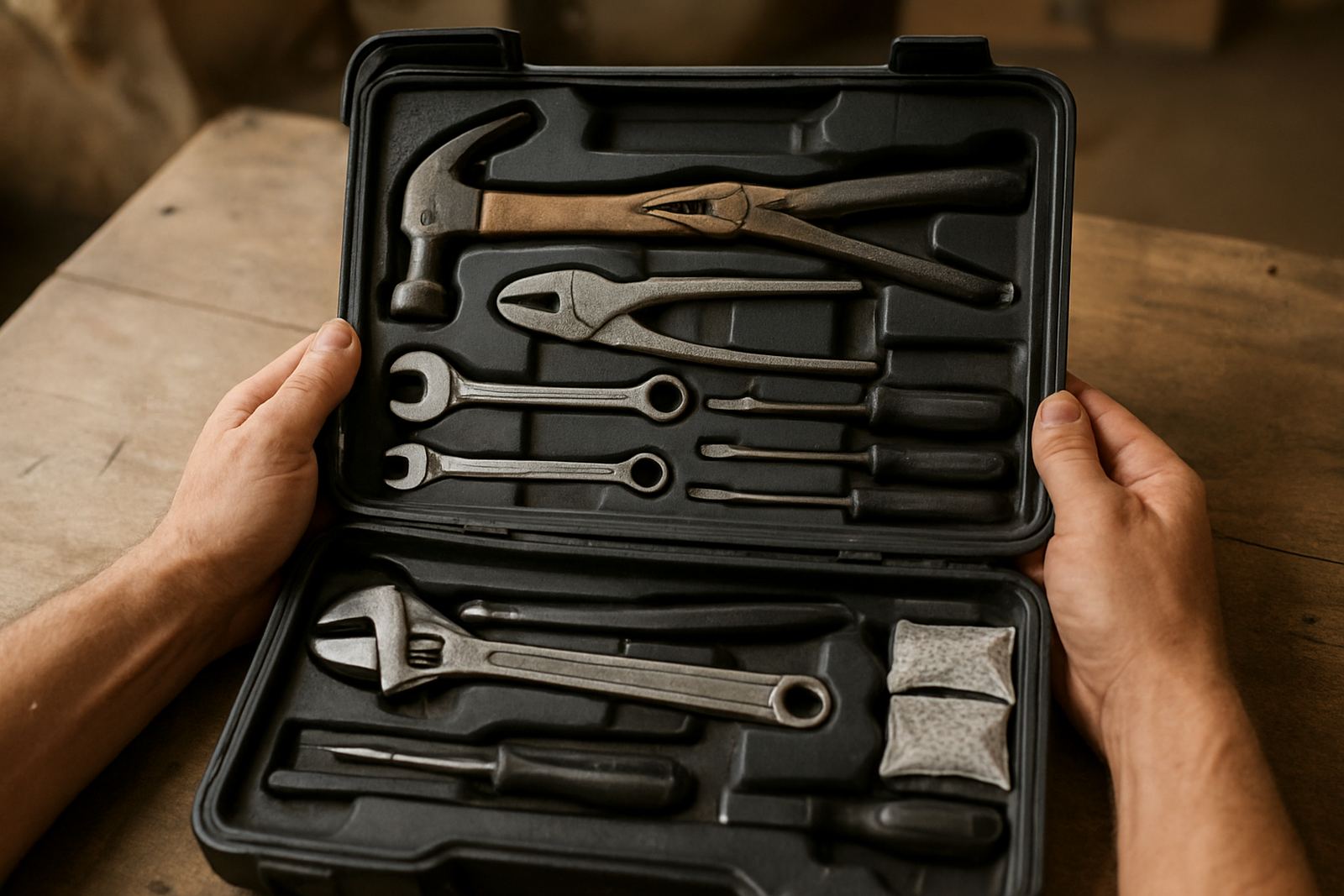
One of the easiest ways to control tools is to stop issuing them one by one. Starter kits and grouped sets make counting simpler and reduce the chance of odd pieces disappearing. A kit for electrical basics, a kit for marking out, or a kit for fastening work can be checked as one unit.
This also helps when schools must plan budgets carefully. Instead of replacing a random mix of lost items, you can replenish a full set or replace only the missing part. It gives the school cleaner records and better value from each order.
- General hand tool kits for everyday practical work.
- Measuring and marking kits for accurate classroom tasks.
- Basic electrical kits with safe, clearly stored accessories.
- Workshop starter kits for new labs or upgraded rooms.
- Consumable packs for screws, bits, blades and fixings.
For a technical department in Westmead or New Germany, that approach can cut the end-of-term scramble. You know what needs replacing, and you know which group used which set. It is practical and easy to train new staff on too.
Train staff and learners on the same rules
Tool control only works when everyone uses the same system. If one teacher issues tools from a drawer and another from a tray, the lab becomes inconsistent. Training is part of the setup, not an extra.
Short on-site inductions are useful for teachers, lab assistants and even senior learners who help manage equipment. Show them how to log items, how to spot damage, and how to report missing stock straight away. Keep the rules short enough to remember and visible enough to follow.
- Show learners how to carry and return tools safely.
- Teach the difference between wear, damage and loss.
- Explain who may issue electrical or cutting tools.
- Keep a repair box separate from working stock.
- Review the system once a term and after any room change.
That review matters. A system that worked for 20 learners may not hold up when classes grow or a new subject teacher takes over. Schools that update their process each term usually find fewer losses and less frustration. Small, consistent habits beat big clean-ups every time.
What a practical school tool plan should include
Before a new term starts, schools should check that the tool room matches actual classroom use. A practical plan is not only about buying more items. It is about making sure the right items are present, counted and ready.
That plan should include the stock list, replacement schedule, storage layout and any training needed for staff. If a school has multiple technical subjects, the lists should be standardised so everyone records tools the same way. This helps with ordering and also with handover when staff change.
In Pinetown, a school that runs woodwork and basic engineering classes might keep separate issue cards for each room, then use one central record for consumables and replacements. That reduces cross-over and makes audits much easier. It also helps if the principal or finance team wants a quick report on what was bought and what still needs attention.
A Durban example that keeps lessons moving
A technical school in the Durban area can lose a lot of teaching time when tools are shared without a register. One missing hammer leads to another class borrowing from the next room, and soon the workshop is short on several basics. With a fixed issue-and-return routine, that chain stops.
For example, a school in Pinetown might pack each learner group a labelled tray with a tape measure, combination pliers, screwdrivers and marking tools. The group leader signs for the tray, the teacher checks it back at the end, and damaged items go straight into a repair box. After that, the admin side is simple. Replace what is missing, note what is damaged, and refresh consumables before the next practical block.
That sort of system keeps the lab safer, saves money, and gives staff more control over what happens in class. It also makes life easier when the school needs courier delivery for replacements or wants advice on setting up a new room properly. A well-run tool room is not just tidy, it supports better teaching every day.