Start With the Jobs You Repeat Every Day
Before moving anything on the bench, list the tasks that happen most often. On many trade benches that means measuring, marking, cutting, fastening, drilling and checking fit. The tools used for those tasks should live closest to the front edge or just above the work area, not at the back of the room where they get buried under offcuts and packaging.
A practical layout starts with frequency, not with size. A bulky item that is only used once a week can sit on a lower shelf, while a small cutter or driver bit that is used 30 times a day should be within easy reach. That simple shift saves a surprising amount of motion over a full shift.
- Put the top 5 daily tools within one step of the main working position.
- Keep measuring tools in one marked zone so they are never shared with general storage.
- Separate cutting, fastening and finishing tools to reduce mixing and lost time.
Use Reach Zones to Reduce Repeated Stretching
Most workshop injuries do not come from one big lift, they come from repeat strain. Reaching across a crowded bench 100 times a day is hard on shoulders and wrists. The best layout uses clear reach zones: close hand zone, one arm zone and back-up storage. That way the tools you use constantly are placed where your hand naturally falls.
For a 1.8 metre bench in Pinetown, that usually means keeping the front 300 to 400 mm clear, then setting the most used items in the middle section. Less-used spares can go to the side or upper rack. In a humid coastal workshop, this also helps reduce rust because tools are not piled in damp corners where air does not move well.
- Front zone: fasteners, pencils, tape measure, cutters, bits and gauges.
- Middle zone: drills, clamps, square, impact accessories and small fixings.
- Rear zone: stock boxes, backup hand tools and items used only for changeovers.
Build Around the Bench, Not Around the Cupboard
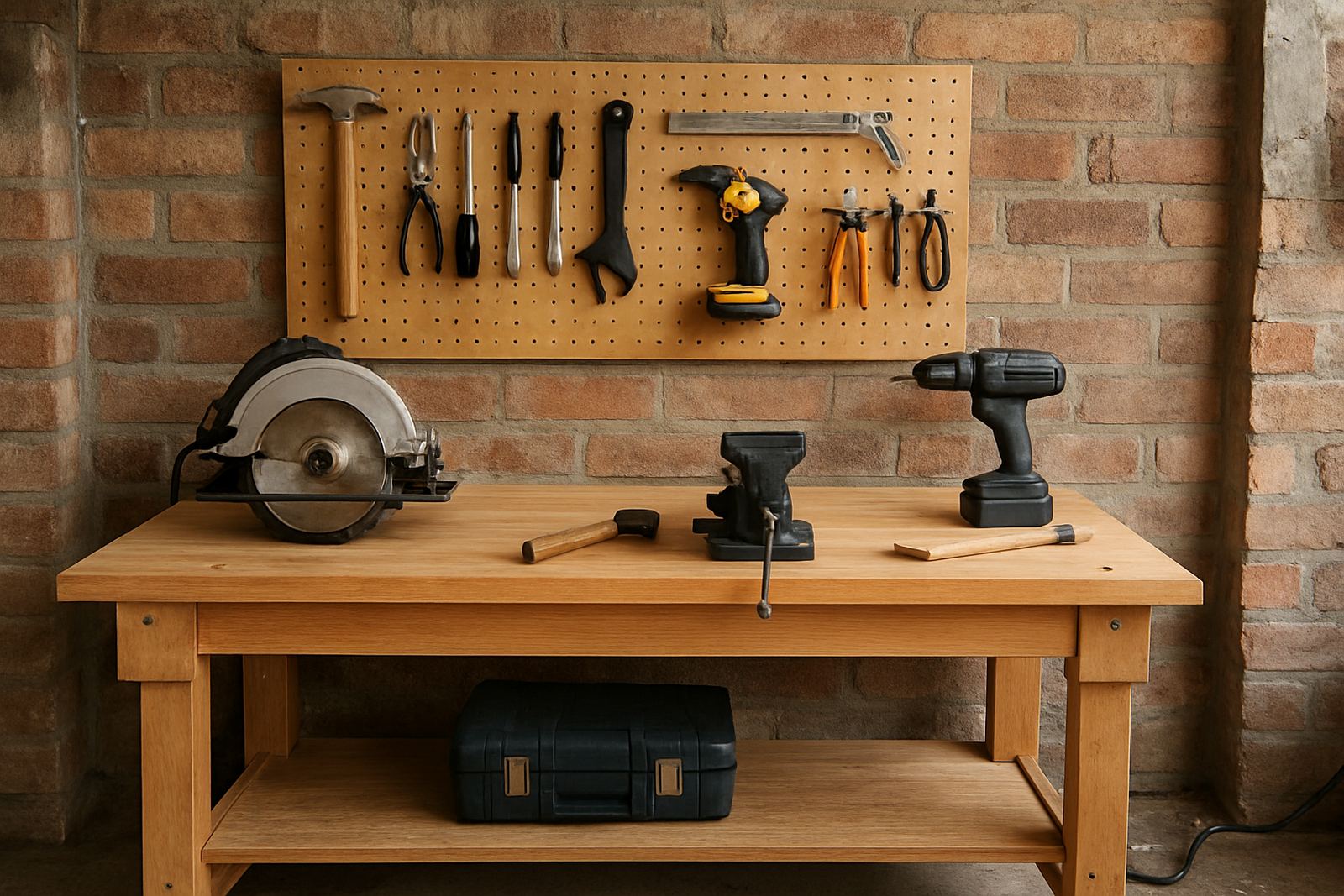
Many workshops keep buying storage before they sort the layout. The result is a tidy cupboard and a messy bench. A faster setup works the other way around. First decide what must stay on the bench, then decide what should hang above it or live under it. The aim is to keep the working surface free enough for the job while still having the right tool within reach.
In smaller units around Westmead or New Germany, a wall rail, shallow shelf and labelled bins often do more than a deep cabinet. If you do assembly, repair or light fabrication, consider using the wall for repeat items and the lower area for consumables that need dust protection. Keep heavy items low so they are safer to lift and less likely to get dropped during load-shedding changeovers when lighting is not ideal.
- Use wall hooks for the items you pick up all day.
- Keep screws, tips, blades and drill bits in labelled containers.
- Store heavier kit below waist height to reduce lifting strain.
Match Storage to Power Outages and Shift Work
South African workshops have to plan for interruptions, and load-shedding changes the way a bench should be organised. When power cuts arrive, the fastest workers are the ones who can switch to hand tools and continue without hunting for chargers, batteries or spare leads. Keep a small outage-ready zone with the tools needed for manual work, especially if you do fitment, basic maintenance or site prep.
This also matters for teams working different shifts. If one team leaves the bench untidy, the next shift loses time before the first task even starts. Clear positions, shadowed outlines or labelled zones make it obvious when something is missing. In a busy Durban workshop, that discipline saves time every day and cuts the small frustrations that slow jobs down.
Anele from operations will usually tell you the same thing: when every item has a home, stock checks become quicker and the bench stays usable even during a rushed morning start.
Set Up a Simple Refill and Replacement Routine
Fast benches depend on steady consumables. If you run out of blades, discs, drill bits or fixings, the whole layout starts breaking down because workers begin borrowing from other stations. The answer is a simple replenishment routine with set stock levels and a regular check point. That keeps the bench working the way it was planned.
For trade workshops in Durban North, Umhlanga and Hillcrest, a weekly 10 minute review is often enough for standard benches. Count what is left, replace the fast-moving items, and note anything that keeps disappearing too quickly. If a tool is constantly missing, it may need its own marked place or a duplicate in the right area.
- Check consumables on the same day each week.
- Keep one spare set of the most used accessories.
- Replace worn items before they slow the job or damage material.
A Pinetown Example: Faster Assembly on a Small Bench
A small workshop in Pinetown doing repetitive assembly was losing time between steps because tools were spread across two benches and a shelf behind the door. The team did not need a bigger room, only a better layout. After grouping measuring tools, drivers, cutters and fixings into one reach zone, the average hand-off between tasks dropped noticeably. Jobs still took the same skill, but less time was wasted walking back and forth.
The real gain was consistency. New staff found what they needed faster, the evening team did not have to reset the entire room, and the bench stayed clearer through the week. That is the point of faster bench layouts: fewer interruptions, fewer searches and a steadier pace. If you are setting up a new trade bench or improving an old one, start by putting the most used tools where your hands already go.