What A Step Drill Bit Does In The Workshop
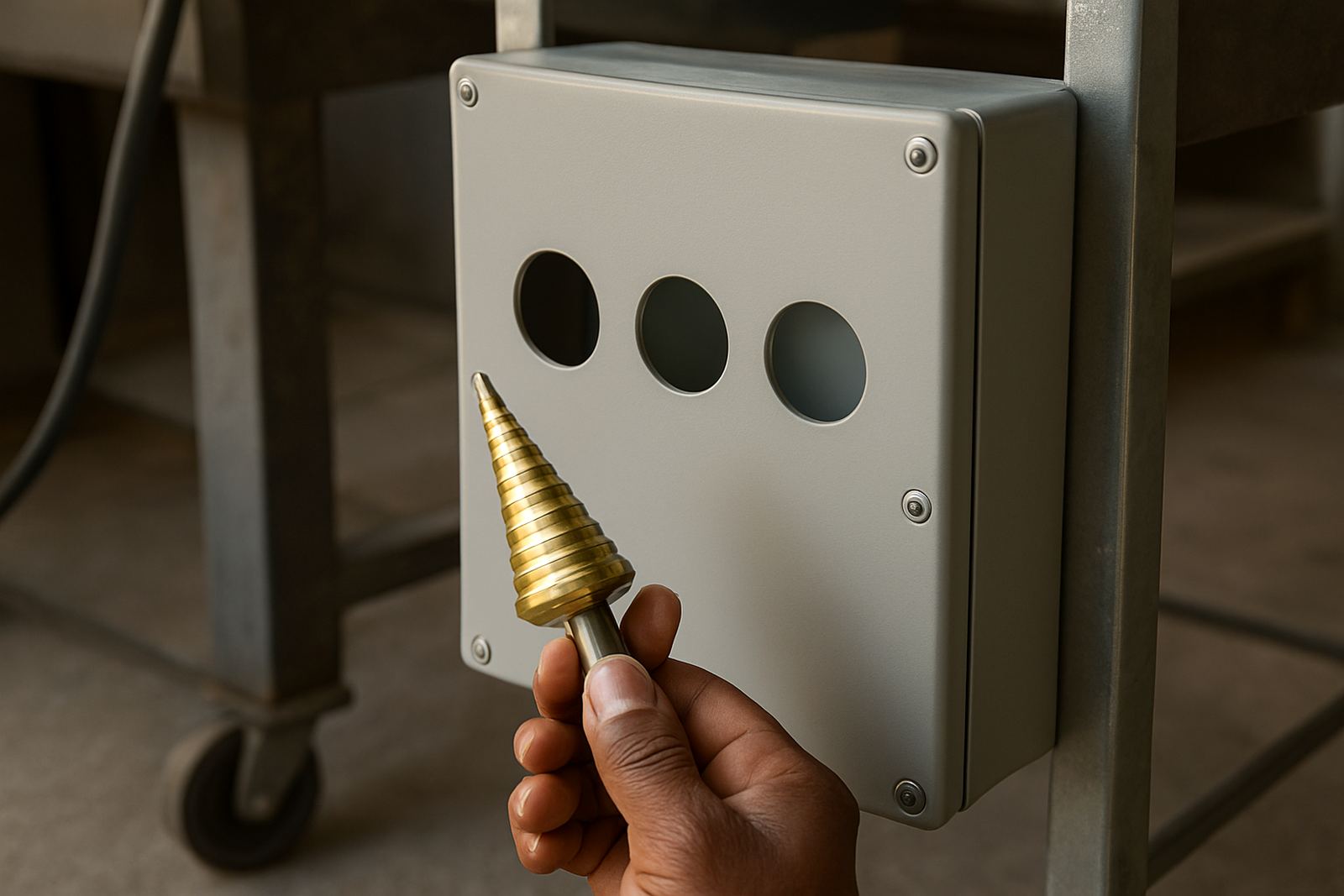
A step drill bit is used to cut or enlarge holes in thinner materials by moving up through a series of graduated diameters. Instead of drilling one size and changing bits again and again, you can work through the steps until the opening matches the fitting, grommet, cable gland or fixing point you need. That makes it useful on electrical panels, light steel enclosures, vehicle body panels and mild sheet-metal fabrication.
For Durban workshops, especially where humidity is high, a clean cut matters because rough edges hold moisture and start corrosion faster. A step bit also helps reduce burring, so you spend less time cleaning up with a file or deburring tool afterwards.
- Suitable for sheet metal, aluminium, plastics and thin mild steel
- Best for enlarging existing holes in controlled increments
- Helps keep panel openings round and tidy
- Useful where access is tight and tool changes slow the job down
Sizes, Step Ranges And Typical Options
Step drill bits are usually chosen by the smallest starting size, the largest cutting diameter and the number of steps in between. A common workshop bit may start at 4 mm or 6 mm and step up to 20 mm, 30 mm or more, depending on the model. The right choice depends on the hole sizes you use most often for fasteners, conduit, glands and light fittings.
When ordering, check whether you need imperial markings, metric markings, or both. Some users prefer a single bit for general panel work while others keep two or three sizes on hand for different plate thicknesses. If your team works across Pinetown, Westmead and Umhlanga, it helps to standardise around the hole sizes you use most often so everyone knows which bit to reach for first.
- Small workshop sizes for control panels and light plastic work
- Medium sizes for cable glands, brackets and appliance repairs
- Larger sizes for sheet-metal openings and panel modifications
- Options with stepped increments for quicker sizing on repeat jobs
Where It Suits South African Trade Jobs
This type of bit is well suited to trade workshops, fitment bays, maintenance teams and DIY users who need clean openings in thinner material. It is particularly useful for electricians drilling gland plates, sheet-metal workers opening up panels, installers fitting accessories and motor-body teams working on brackets or body repairs. If you are setting up a new workshop in New Germany or expanding a service team in Durban North, a step bit is one of those tools that gets used more than people expect.
It also helps in places where power access can be a nuisance during load shedding. Because the bit works quickly and with less chatter than a badly matched twist bit, you can finish more jobs efficiently when you are running on a generator or inverter setup. For coastal workshops, it is a practical choice because less force is needed and you reduce the chance of damaging thin, treated or painted sheet.
- Electrical panel fitting and gland openings
- Vehicle accessory installs and body panel work
- General maintenance and metal fabrication
- Plastic enclosures, control boxes and light-duty aluminium work
How To Use It Properly On Sheet Metal
For best results, mark the centre clearly and clamp the workpiece before drilling. Start with a pilot hole if needed, then let the step bit cut at a steady speed without pushing too hard. The tool should do the work. Excess pressure can overheat the cutting edges, oval the hole or leave a rough finish. On painted sheet, score the entry point lightly first to help stop the bit wandering.
Use cutting fluid or a suitable lubricant on steel and aluminium, especially for thicker gauge material. Keep the drill square to the surface and stop on the step size that gives you the correct opening. If you need a slightly larger diameter, step up carefully rather than trying to force a jump. A quick test fit before final assembly saves time later, and in a busy workshop that matters.
- Clamp the sheet properly before starting
- Use moderate speed and light pressure
- Apply cutting fluid on metal for cooler cutting
- Check fit before moving to the next hole
Care, Storage And Reuse Between Jobs
Like most cutting tools, a step drill bit lasts longer when it is cleaned after use and stored dry. Wipe off metal swarf, coolant and dust before putting it away. If the bit has cut galvanised sheet or worked in a coastal workshop, give it a light wipe with a corrosion inhibitor so surface rust does not start. A bit with damaged steps or rounded cutting edges will heat up fast and give poor results, so replace it before it causes the next job to run late.
Keep it separate from loose bolts and abrasive discs, because banging around in a toolbox can nick the cutting edges. For teams that do seasonal workshop refresh work or tool replacement matching, it is worth checking the condition of step bits during stock audits. A worn tool can make even a simple panel opening messy, and that is avoidable.
- Clean off swarf after every job
- Store dry and lightly protected against rust
- Inspect the step edges for chips or wear
- Replace the bit when it starts cutting rough or slow
What To Check Before You Order
Before placing an order, confirm the material thickness, the hole size range and the type of drill you will use it with. Check the shank size so it fits your chuck properly, and make sure your team knows whether they need a single bit for occasional use or a few sizes for regular production work. If the job involves panel standards, it helps to match the step sizes to the common fixing and gland dimensions you use on site.
You should also check whether the bit is intended for hand drills or drill presses, and whether you need a coating or finish that suits steel, stainless or aluminium. For workshops in Pinetown, Hillcrest and across the Durban area, it is also sensible to keep spares on hand because courier lead times can still interrupt a job when the right hole size is needed immediately.
- Required hole range and final diameter
- Material type, including painted or galvanised sheet
- Shank size and drill compatibility
- Stock levels for repeat work and spare tool cover
Key facts
| Product type | Step drill bit for sheet metal and panel openings |
|---|---|
| Application | Hole enlargement, deburring and neat round openings |
| Common size range | Typical step ranges from 4 mm up to 20 mm, 30 mm or higher |
| Material use | Sheet metal, mild steel, aluminium, plastics and thin enclosures |
| Drive requirement | Works with standard electric or cordless drills |
| Finish | Clean-cutting edge profile for controlled drilling and reduced burring |