Built for daily hammering on site and in the workshop
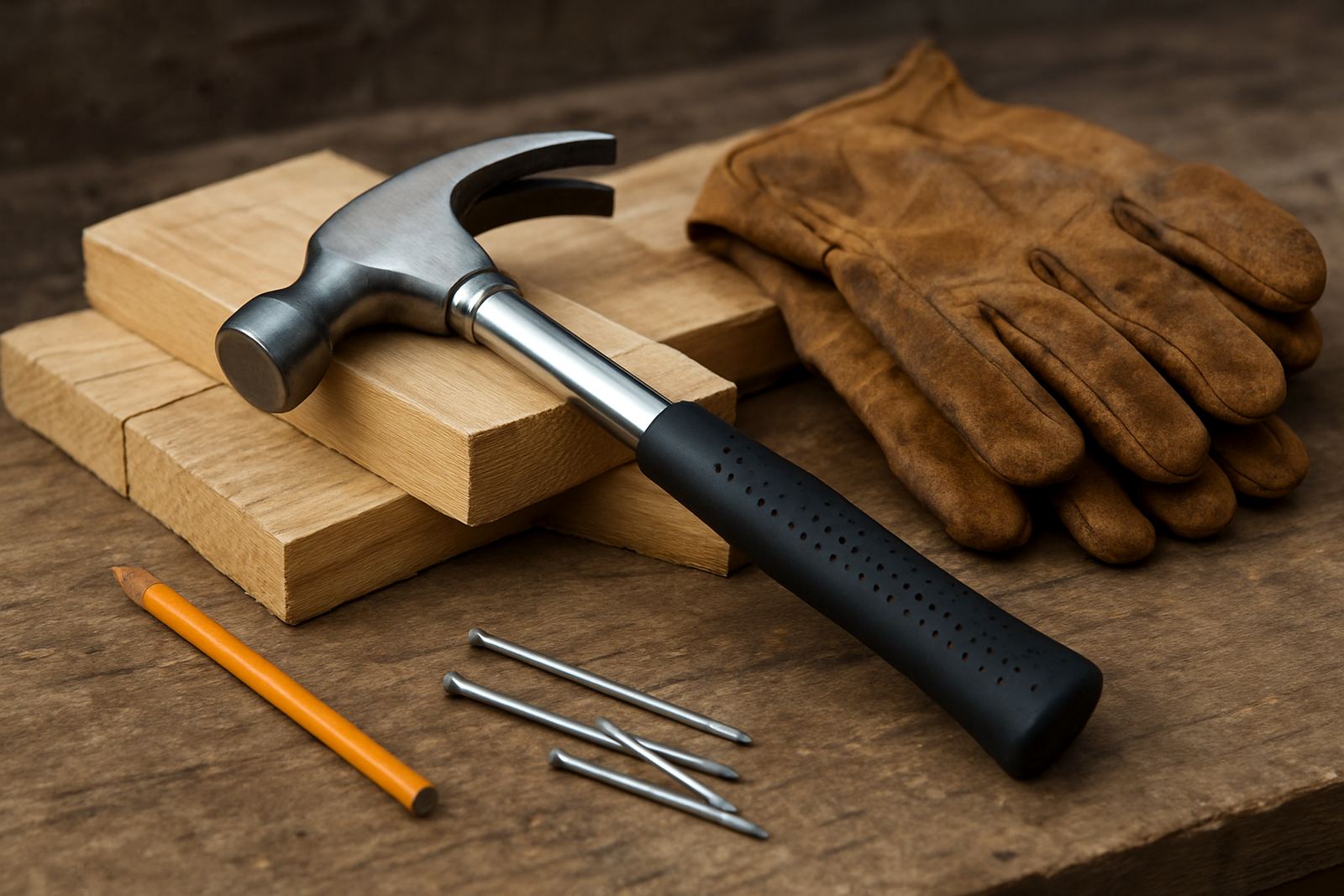
The Heavy Claw Hammer is the sort of tool you keep close for repeated fixing jobs, small framing work, timber strip-outs and general workshop use. It gives you enough head weight to drive nails cleanly without feeling awkward in the hand, which matters when you are working through a long list of repairs or setting up a new build area. For Pinetown workshops, builder’s yards and repair crews doing daily runs, this type of hammer is a good all-rounder.
It suits both trade users and serious DIY users who want one dependable hammer rather than a light household version that struggles with harder timber. The claw end also helps with nail removal, opening packing crates and making quick corrections when you need to shift material fast. In humid coastal conditions around Durban, a good hammer should be easy to clean and store, so it stays ready after a wet day or a dusty one.
Sizes, balance and grip options to look for
When ordering a heavy claw hammer, check the head weight, handle length and grip type. A heavier head gives more strike force, while a longer handle can improve swing control. The best option depends on how much time you spend driving nails versus light demolition. A crating job in Westmead may need a different feel from a maintenance kit in Hillcrest.
- Head weight options are usually around 16 oz to 20 oz for general trade work
- Longer handles offer more leverage, but can feel less compact in tight spaces
- Rubber or textured grips help with sweaty hands and oily gloves
- Steel shaft styles feel firmer, while fibreglass can reduce vibration
- Claw shape matters for nail removal and pulling light fixings
If your team uses the hammer all day, a balanced swing is worth more than raw weight alone. Too much head weight can tire the wrist, especially when you are working overhead or on repeated fixings. A well-balanced hammer should feel steady from the first strike, not top-heavy.
Where this hammer suits best
This hammer is suited to workshop fixes, framing, pallet work, light demolition, crate building and general maintenance. It is also useful in jobbing environments where one tool needs to cover several tasks, from driving fasteners to lifting stubborn nails. For trade counters and site kits, it is a practical item that gets used more often than people expect.
- Joinery and light framing jobs
- Crating and packing for deliveries
- Workshop repairs and maintenance tasks
- Strip-outs and removal of old fixings
- General site use for carpentry and fitting crews
It is not a specialist demolition hammer, so if the job calls for heavy breaking, you will want a different tool. But for day-to-day fixing work, this hammer covers a lot of ground without taking up much kit space. That makes it useful for mixed teams where tools move from one task to another during the day, and where load-shedding or time pressure can mean you need quick manual work rather than powered kit.
No power, gas or fitting required
This is a manual hand tool, so there are no power, gas or battery requirements. You do not need charging time, fuel canisters or cable management. That makes it handy when the job starts early, the site is moving between areas, or load-shedding has disrupted powered tools and you still need to keep work moving.
Because there is nothing to install, the main requirement is correct use and safe handling. Make sure the claw is used on suitable fasteners and not on hardened material that can chip or slip. Wear eye protection when working with nails, timber splits or old fixings. On cramped sites or when working near finished surfaces, use a steady grip so you do not mark surrounding material by accident.
Care, cleaning and storage for longer service life
A heavy claw hammer will last a long time if it is looked after properly. Wipe off dust, timber resin and moisture after use, especially after outdoor work in coastal humidity. If the hammer has a steel head, keep it dry and store it in a tool bag or cabinet rather than leaving it on a damp slab or truck tray. A little care stops rust and keeps the striking face in better shape.
- Check the handle for cracks, splinters or looseness at the head
- Clean dirt from the claw so nail removal stays smooth
- Store away from water and chemical spills
- Do not use the hammer for prying heavy bars or as a chisel
- Replace the tool if the head moves or the grip starts to fail
For teams doing regular workshop work, it helps to include hammers in monthly tool checks. That is a simple habit but it catches wear early, which saves time later. If you are running several sites, a standard check list keeps tool condition more consistant across crews.
What to confirm before you place an order
Before ordering, confirm the head weight, handle material, grip style and overall length so the hammer matches the job. It also helps to know whether the tool will be used mainly for framing, crate work or general maintenance. A hammer chosen for site carpentry may not feel right for a packing bench or a workshop bay.
- Check the preferred weight in ounces or grams
- Confirm if a soft grip or harder handle feel is needed
- Ask whether the hammer will be used with gloves
- Match the tool to the type of nails and timber on site
- Consider adding spare hammers for shared workshop kits
For trade orders in Pinetown, New Germany, Westmead, Hillcrest, Durban North and Umhlanga, we can help match the hammer to the rest of the kit so your team is not carrying mismatched tools. Nationwide courier delivery is available for workshop restocks, starter kits and replacement items. If you are setting up a new bay or refreshing an old one, a simple, well chosen hammer is a small part that gets used every day.
Key facts
| Product | Heavy Claw Hammer |
|---|---|
| Use case | Workshop fixes, crating, framing and daily site work |
| Head weight | Typically 16 oz to 20 oz options |
| Handle options | Steel shaft, fibreglass or gripped handle styles |
| Power or gas needed | None |
| Delivery | Nationwide courier from Pinetown, Durban |