What a Parts Organiser Case Does in a Busy Workshop
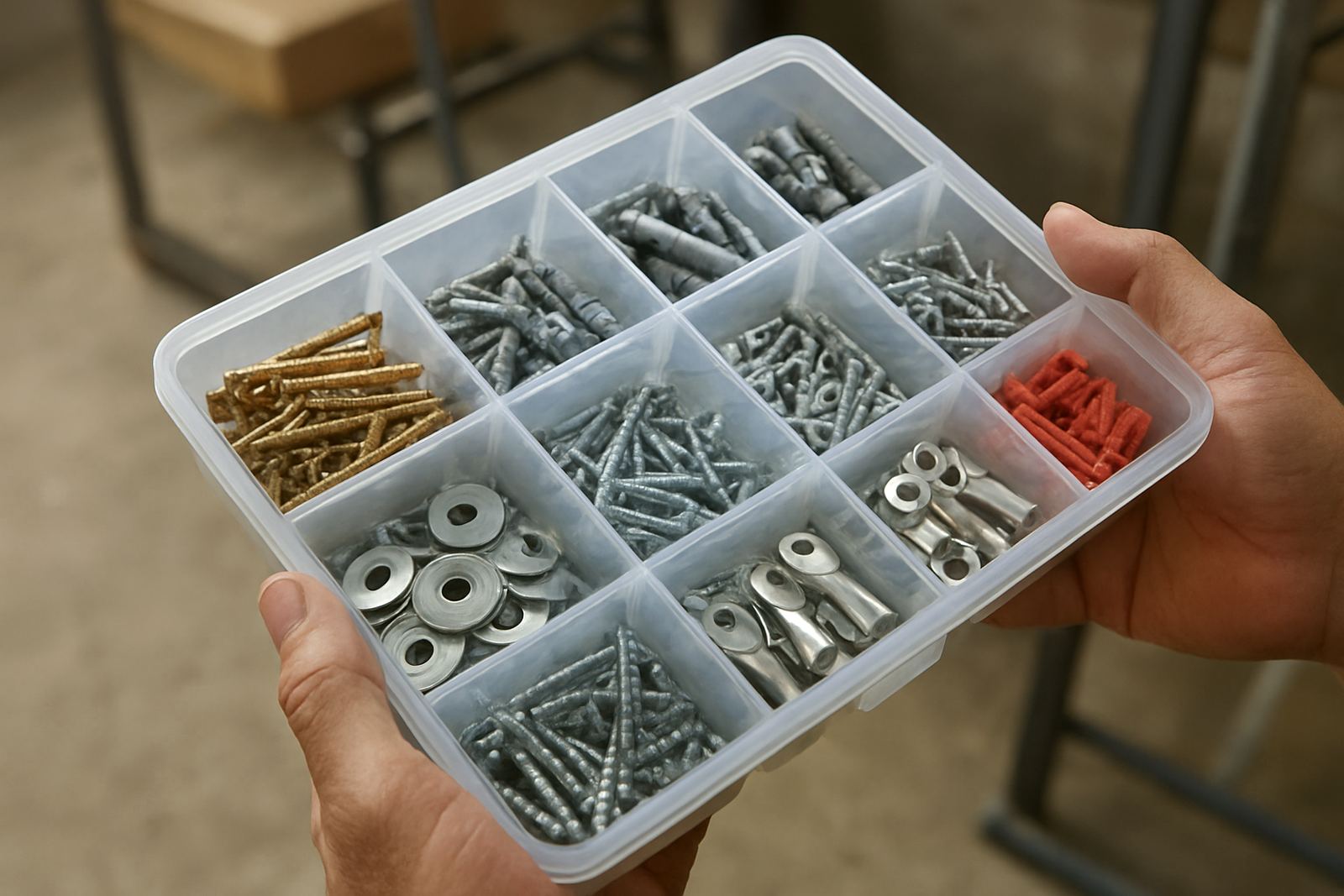
A parts organiser case is a compartmented storage case made for the small items that disappear first in any workshop. It keeps screws, wall plugs, cable lugs, hose clips, drill bits, washers, fasteners and other loose consumables divided into separate sections so you can find what you need fast. In a trade setting that means less time hunting through packets and more time getting the job done.
For workshops in Pinetown, Westmead and New Germany, the biggest benefit is order. When stock is visible and sorted, you can check what is running low before a job starts. That helps with reorder planning and reduces waste from opened packets, mixed sizes or damaged items. It also makes it easier for new staff to learn where things belong, which matters on busy days when a replacement hand is in the store room for the first time.
- Stores screws, fittings, terminals and similar small parts
- Helps reduce lost stock and mixed sizes
- Useful for workshop counters, service vans and site kits
- Supports stock counts and replenishment planning
Sizes, Compartment Layouts and Case Options
Parts organiser cases are available in different lengths and compartment layouts so you can match the case to the way you work. Smaller cases suit technicians who carry a focused range of consumables, while larger cases suit workshop stores and field teams that need more divisions. Some users want fixed compartments for one product type, while others prefer adjustable dividers for changing stock lines. That flexibility is useful if your work changes between electrical, plumbing, general maintenance and light fabrication.
When comparing options, look at the number of compartments, the depth of each section and the strength of the lid clips. A shallow layout is ideal for terminals, anchors and washers. Deeper compartments are better for bulk screws, cable glands or mixed fitting packs. If the case will travel often, check that the lid seals properly and that the handle is moulded firmly into the shell.
- Compact cases for hand-carry use and small service kits
- Medium cases for general trade stock and site repairs
- Large cases for workshop replenishment and bundled consumables
- Options with fixed or adjustable compartment layouts
Where It Suits: Trade Workshops, Stores and Site Work
This case suits electrical teams, maintenance contractors, builders, plumbers and workshop stores that handle many small parts every day. It is also useful in training rooms where learners need to identify common fittings and keep their kits tidy. A well planned organiser helps during load-shedding too, because the items you need for emergency repairs are already grouped and easy to grab when the power is off.
In coastal areas such as Durban North and Umhlanga, small parts can rust or deteriorate if they sit open in damp air. A closed organiser helps protect contents from dust and light moisture, especially if the case is stored in a vehicle or near an open roller shutter. It is not a replacement for proper dry storage, but it is far better than loose packets in a drawer or open shelf. For site work around Pinetown, Hillcrest and the broader Durban region, that extra protection is practical and not a luxury.
- Workshop counters and stock rooms
- Field service vans and contractor kits
- Training centres and starter kits
- Temporary site stores during maintenance shutdowns
Installation, Power and Gas Requirements
A parts organiser case needs no installation, no power and no gas. It is a hand-carry storage item that can be used immediately after unpacking. That makes it one of the simplest workshop organisers to introduce when setting up a new store or standardising stock across a team. Place it on a shelf, in a cabinet, in a van or on a workbench and start loading the parts you use most often.
For workshop planning, think about how the case will be carried and where it will be opened. If it will sit in a vehicle, check that the lid stays locked when shaken and that the latches can handle daily use. If it will stay on a shelf, make sure the dimensions fit the available space and allow for clear labelling. A missing label can cause more trouble than a missing screw, so it pays to mark compartments clearly.
- No electricity or gas needed
- Ready to use straight away
- Suitable for shelf storage, van storage and site carry use
- Can be paired with labels or stock cards for control
Care, Cleaning and Long-Term Use
To keep a parts organiser case in good condition, empty it now and then and wipe out dust, metal filings and old packaging bits. A damp cloth is usually enough, but make sure the case is dry before you reload it. If oily parts are stored inside, use a mild degreaser on the affected sections and avoid harsh solvents that can cloud the plastic or weaken the hinges over time.
Check the latch, handle and divider edges during routine workshop inspections. In busy trade environments small knocks can loosen a clip or crack a corner, especially if the case is dropped from a vehicle or packed with heavier fittings. If you use the case around coastal humidity, keep silica packs or dry stock paper inside where needed and store it away from direct sun. That helps prevent corrosion on the contents and keeps labels readable.
- Wipe dust and filings out regularly
- Do not overload small compartments with heavy metal stock
- Keep away from direct heat and standing water
- Inspect clips and hinges during stock checks
What to Check Before You Order
Before placing an order, count the items you want to store and decide whether you need fixed sections or adjustable dividers. Measure the typical pack sizes you use for screws, connectors and fittings so the compartments are not too shallow or too tight. If the case will be shared between staff, choose a size that suits the heaviest user and the most common job type, not only the smallest repair kit.
Also check whether you need a single case or several matching cases for stock grouping. Many workshops split by category, for example electrical terminals in one case and fasteners in another. That makes replenishment easier and helps with standardising stock lists. If you are unsure, Jameson Tools can assist with tool kit planning, starter kit bundling and replacement matching for a cleaner setup that actually works day to day.
- Confirm the compartment count and internal size
- Check lid clips, handle strength and divider layout
- Match the case size to van storage or shelf space
- Decide if you need one case or a set for stock control
Key facts
| Product type | Compartment parts organiser case |
|---|---|
| Use | Screws, fittings, terminals and small workshop consumables |
| Material | Durable moulded storage body with secure lid and handle |
| Power requirements | None |
| Gas requirements | None |
| Best suited to | Workshops, service vans, site kits and stock rooms |