Built For Daily Workshop Cutting
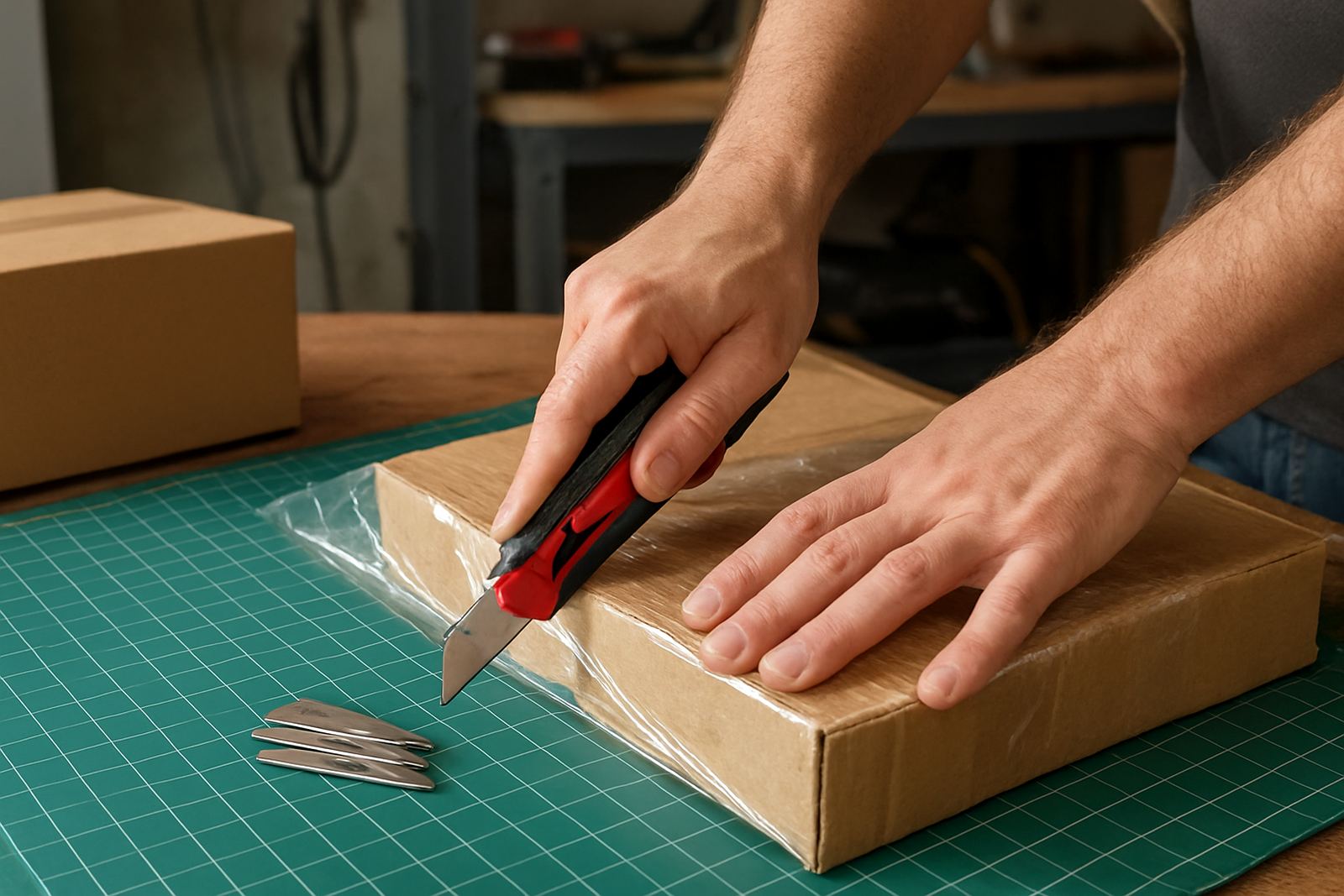
This utility knife is a retractable hand cutter made for neat, repeatable cuts on packaging, plastic sheeting, cardboard, insulation wrap and similar jobsite materials. It gives you a fixed grip, a sliding blade and a body that can be carried in a pocket, apron or toolbox without taking up much space.
For Durban and Pinetown workshops, the main value is control. When you are trimming tape lines, opening cartons or cutting underlay on a concrete floor, the blade extends only as far as you need. That makes it easier to work cleanly and reduces wasted material. It is also handy for schools, maintenance teams and home users who want a practical cutter for light to medium duty jobs.
Sizes, Blade Styles And Replacement Options
Utility knives are usually supplied in a standard compact body size with a retractable blade holder. Some versions use snap-off blades while others take replaceable fixed blades. The right option depends on how often you cut and what material you handle most days.
- Compact body for pocket carry and quick access
- Retractable blade for safer storage and transport
- Metal or reinforced plastic handle options
- Standard replacement blades for easy replenishment
- Snap-off blade styles for frequent fresh edges
For trade counters and workshop teams, standardised blades are easier to stock because one blade type can support several cutters. If you run a mixed site with packing, maintenance and light fabrication, that saves time when you are replacing worn blades and keeping spares on hand.
Where It Suits In South African Workspaces
This cutter suits packaging bays, hardware stores, signage prep, insulation work, electrical stores and general maintenance workshops. It is also useful in small business settings where there is regular opening of cartons, trimming of film or cutting of non rigid sheet material.
In coastal areas like Durban North and Umhlanga, tools need to be kept dry because humidity can affect metal parts and blade storage. In inland workshops around Hillcrest or New Germany, dust from timber, cardboard and general shop work can build up around the slider if the knife is left open. A quick wipe down at the end of the day keeps it in better shape.
- Packaging and dispatch tables
- Insulation and sheeting jobs
- General maintenance and store room use
- Light DIY work at home or on site
No Power Or Gas Needed
This product is fully manual, so there are no power, battery or gas requirements. That makes it a good choice during load-shedding and for mobile teams that move between sites. You only need the correct replacement blades and a safe storage spot when the knife is not in use.
Because it does not rely on electricity, it is simple to keep in a vehicle kit or site box. For trade crews working across Pinetown, Westmead and the wider Durban area, that means the tool is ready whenever there is a box to open or a strip of material to trim. No charging, no cables, no waiting.
Care, Blade Safety And Simple Servicing
Keep the blade retracted when the knife is not in use and replace dull blades before they start snagging material. A blunt blade makes you push harder and that can lead to slipping. It is worth checking the slider action every so often, especially if the knife has been used in dusty or damp conditions.
- Wipe the body after cutting adhesive backed material
- Store with the blade fully retracted
- Replace worn blades before they bend or drag
- Keep spare blades in a dry container
- Do not use for prying or as a chisel
If the knife is used by a team, set a simple issue and return routine so damaged blades are removed quickly. That helps reduce hand injuries and keeps cutting work neat. A little attention goes a long way, and it avoids unnecessary wastage too.
What To Check When Ordering
When ordering a utility knife, check the blade type, handle material, lock action and whether replacement blades are easy to source. If the tool will be used by several people, ask for a model that is simple to operate and comfortable for both left and right hand users.
- Blade style and replacement availability
- Handle grip and overall size
- Locking or sliding action quality
- Suitability for the material you cut most often
- Whether you need bulk quantities for stock control
Jameson Tools can help match the cutter to your workshop use, from starter kits to bulk replenishment. We supply from Pinetown in Durban with nationwide courier delivery, and we can also help standardise your tool list if you are setting up a new site or refreshing an older one.
Key facts
| Product type | Retractable utility knife |
|---|---|
| Main use | Packaging, sheeting, insulation and general workshop cutting |
| Blade system | Replaceable utility blades or snap-off style, depending on option |
| Handle material | Metal or reinforced plastic, model dependent |
| Power requirement | None |
| Supply | Available from Pinetown, Durban with nationwide courier delivery |