Why Drill Bit Care Pays Off In A Busy Workshop
In a trade workshop, drill bits get used hard. They cut through mild steel, timber, fibre cement, plastics and masonry, often in the same day, and each material leaves different wear behind. A bit that is still “sharp enough” can still be the reason a pilot hole is oversized, a fixing sits crooked, or a job takes twice as long. Good care is not about being precious with tools, it is about keeping work accurate and reducing waste.
For workshops in Durban and Pinetown, there is another factor: humidity. Bits left lying out in the open can pick up light rust overnight, especially near roller doors or in storerooms that get coastal air. That surface rust is not just cosmetic, it affects cutting performance and makes bits harder to keep clean. If your team works across general maintenance, fit-out jobs or small fabrication, a simple care routine saves money and keeps the finish more consistent.
Drill bit care also helps when load shedding interrupts a job halfway through. It is easy to leave a chuck key, bit set or pilot drill on the bench until the power comes back on, then rush back into work. That is when bits get knocked, mixed up or packed away dirty. A bit of order after each shift makes a real difference.
Clean Bits Before Swarf And Resin Harden
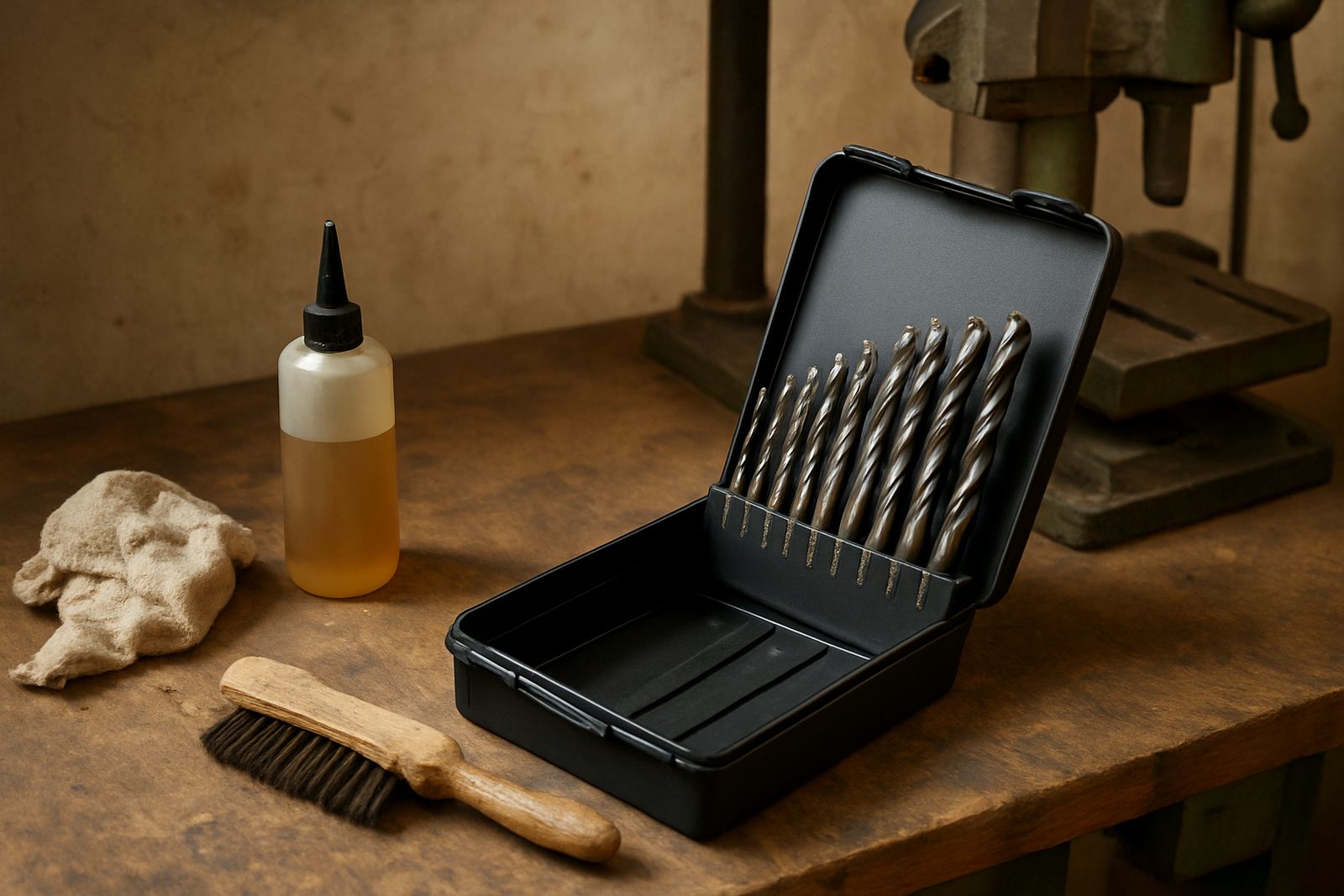
The easiest time to clean a drill bit is as soon as it comes out of the hole. Swarf, dust and resin are much easier to remove before they harden. On metalwork, wipe the bit with a dry rag first, then use a small brush to clear the flutes. For timber work, especially pine and laminated boards, sticky sap can build up fast and reduce chip clearance. A light solvent cleaner can help, but always use it in a ventilated area and keep it away from plastic cases that may soften.
Do not leave bits soaking in random liquid on the bench. That can damage coatings, loosen labels and encourage rust on the shank. For masonry bits, dried dust in the grooves is the main problem. Tap the bit gently to dislodge debris, then brush it clean before packing it away. If you are drilling overhead on site in Umhlanga or Durban North, carry a small cloth and brush in the tool bag so the cleaning happens before the next task starts.
- Wipe bits down after each use, especially before storage
- Clear the flutes with a stiff brush or compressed air if available
- Remove sap, resin and cutting paste before it dries on the surface
- Check that no grit is stuck in the shank before putting it back in a case
Inspect Cutting Edges Before The Next Shift
A quick inspection catches problems before they affect the job. Hold the bit under good light and look at the cutting edges, the tip and the shank. You are checking for chips, rounded edges, burning marks and bent sections. Even a slight bend can cause a bit to wobble and enlarge a hole. If the hole needs to take a plug, anchor or screw properly, that wobble matters.
On job sites in Westmead or New Germany, it is common to see mixed sets of bits used across different materials. That is where wear patterns become confusing. A metal bit used on masonry may look damaged much earlier, while a masonry bit used on steel can blunt quickly. Keep sets separated if you can, and mark them clearly so the right bit is chosen for the right task. It sounds simple, but it saves a lot of frustration.
- Look for blueing or dark marks from overheating
- Check the point for chips or a flattened edge
- Roll the bit on a flat surface to spot a bend
- Separate worn bits from good stock so they are not put back by mistake
If a bit has lost its point or is cutting off-centre, retire it from general use. Some bits can be sharpened, others are better replaced. The key is not to keep forcing a damaged bit through one more job because that usually creates bigger losses later.
Store Drill Bits So They Stay Straight And Dry
Storage matters more than many people think. Loose bits thrown into a toolbox knock against each other, chip the tips and pick up moisture. A proper organiser, rack or labelled case keeps each size in one place and makes missing items easier to spot. It also speeds up kit checks at the start of a shift, which is useful when you are sending a team out in separate vehicles.
If the workshop is near the coast or has a concrete floor that holds damp, keep drill bits off open shelves where they can rust. A closed case with a dry cloth packet or desiccant helps in humid conditions. In a Pinetown workshop, that little extra step can save a box of bits from surface corrosion over a wet weekend. For installers and maintenance teams, storing by diameter and type also reduces the risk of using the wrong bit in a rush.
- Keep bits in labelled sleeves, racks or divider cases
- Store them in a dry cupboard, not loose on a benchtop
- Separate masonry, wood and metal bits clearly
- Wipe off moisture before closing the case
Use The Right Speed, Pressure And Lubrication
Even well cared-for drill bits wear out fast if they are used badly. Too much speed causes heat build-up, and too little pressure lets the cutting edge rub instead of cut. On steel, a cutting fluid can help reduce heat and extend bit life. On timber, a clean pilot hole and steady feed are usually enough. The aim is to let the bit cut, not burn its way through the material.
Listen to the drill. A smooth cutting sound is a good sign. Screeching, smoking or a sudden change in tone usually means the bit is dull, the speed is wrong, or the bit is binding in the hole. If a bit starts to smoke in timber or squeal in steel, stop and check it rather than forcing it through. That small pause is cheaper than ruining the bit or damaging the surface around the hole.
For teams working on site, it helps to keep a short reference list near the charging station or tool case:
- Match the bit type to the material before starting
- Use steady pressure, not force
- Clear swarf from deep holes regularly
- Allow the bit to cool between repeated holes
That extra discipline matters when drilling into treated timber, metal frames or dense masonry. A bit that runs cool and clean lasts longer and keeps hole quality more consistent.
Set Up A Simple Maintenance Routine For The Whole Team
The best drill bit care routine is one the whole team can keep doing. Make it part of end-of-day pack away, not an extra task that gets forgotten. A five-minute check can cover cleaning, sorting, inspection and restocking. If you are running a workshop in Hillcrest or handling several sites from one base, standardising the routine makes it easier for everyone to know where each bit belongs.
We often suggest a simple three-part system: clean after use, inspect before storage and replace or sharpen before the next job. Add a stock list for high-use sizes like 3 mm, 6 mm, 8 mm and common masonry diameters so shortages are spotted early. If your workshop also handles seasonal demand, such as winter maintenance or year-end fit-outs, it is worth refreshing bit kits before the busy period starts.
When the process is clear, less gets lost and fewer jobs are delayed by a missing size. That is especially helpful for mixed teams with different experience levels. A good care routine does not need fancy equipment, just consistency and a place for everything.
When To Replace A Bit And When To Seek Help
Some bits can be sharpened, but not all wear is worth repairing. Replace a bit if the cutting edge is chipped, the shank is bent, or the point has worn so far that it no longer starts cleanly. If a set is being used daily in steel or masonry, track how often the most common sizes need replacement so you can budget for them instead of waiting until a job is held up.
If you are unsure whether a bit still has useful life left, compare it with a new one of the same size. The difference is often obvious once you place them side by side. Jameson Tools works with South African workshops that need practical advice on tool kit planning, starter kit bundling and stock list standardising, so the right sizes are on hand when needed. A small amount of planning avoids the common problem of having plenty of one size and none of the sizes that get used every day.
For courier delivery nationwide from Pinetown, it also makes sense to keep spare high-use bits ready for replacement rather than waiting for a full set to fail. That way the workshop keeps moving and the quality of the holes stays where it should be.