Why a level loses accuracy faster than most tradespeople expect
Levels often look fine after a knock, but the error can be small enough to miss until a cabinet leans, a shelf is off or a drain line holds water where it should not. On busy sites around Pinetown and Westmead, levels get tossed into bakkies, stacked under heavy cases and used as straightedges, then blamed when the job goes sideways. The truth is that the accuracy can drift long before the body shows visible damage.
Even a minor drop onto concrete can shift a vial, damage end caps or twist the frame just enough to affect readings over 1 metre or 2 metres. For trades that rely on repeatable results, that is enough to waste labour and material.
- Check the level after any fall, even if there is no visible dent.
- Do not use it as a clamp bar, pry bar or temporary spacer.
- Keep one level for finish work and one for rough site marking if possible.
Store levels so they stay straight, dry and ready
Good storage is the easiest way to protect level accuracy. In Durban, humidity and salt air can creep into workshop corners, especially if tools are left near open doors or in the back of a canopied bakkie. A level stored properly will last longer and read more reliably, even through a humid summer and load-shedding driven rush jobs.
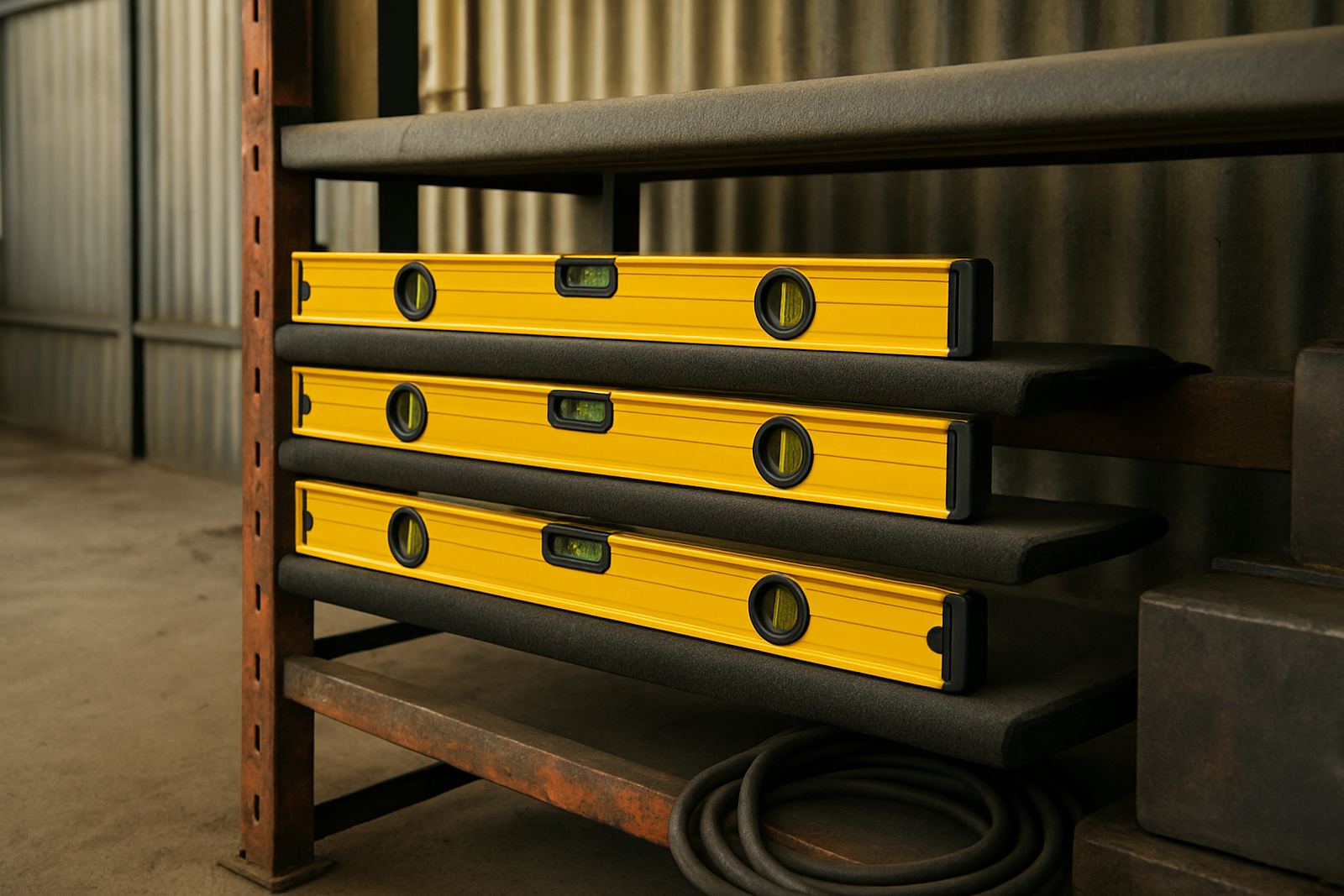
Store levels flat or in a purpose-made holder where they will not flex under weight. Keep them away from welding sparks, grinding dust and sites where solvent overspray can mark the vial windows. If you work in a shared workshop, give the levels a fixed spot so they are not borrowed, dropped and left loose on a bench.
- Use a wall rack or padded sleeve for transport.
- Keep levels separate from heavy spanners and sockets.
- Wipe down after coastal jobs to prevent grime from building up.
- Do not leave them in direct sun on a vehicle dash.
Handle the ends first, because impact damage starts there
Most level damage starts at the ends. When a frame hits the floor, the corner takes the first blow and the internal components can shift. The same applies when the tool is slid off a tailgate, dropped onto paving, or knocked against scaffold poles. A level might still sit flat, but the vial can no longer be trusted.
Teach the team to carry levels with two hands and to pass them carefully rather than tossing them across a site. If a level has removable caps, check that they are seated properly. If the frame is bent or the edges are burred, it is time to replace it rather than keep pushing it through rough work.
- Carry long levels in a case or by hand, never loose under other gear.
- Inspect the ends for cracks after any impact.
- Never leave a level where it can roll off a pipe rack or step ladder.
Cleanliness matters when the reading has to be exact
Dust, plaster, wet adhesive and metal swarf can all affect how a level sits on a surface. If the base is dirty, the bubble may be fine but the contact point is not. That leads to false readings and wasted adjustments. On workshop fit outs in New Germany or Hillcrest, this is a common issue when levels move from timber work to steel frames without being cleaned between tasks.
After use, wipe the base and the vial windows with a soft cloth. If the level has been exposed to cement dust or sticky residue, use a mild cleaner and dry it fully before storage. Avoid harsh scraping that can nick the base, because even a small burr can throw off the reading on a smooth surface.
- Use a soft cloth or brush, not steel wool.
- Clear debris from the base before every important check.
- Dry the tool after cleaning, especially in coastal humidity.
Build a simple check routine for workshop and site use
Most level problems are caught early when teams use a quick routine. This does not need special equipment, just a consistent habit. Before the day starts, inspect the frame, the vials and the edges. Midway through the job, check that the tool has not been knocked or dropped. At the end of the day, clean it and put it back in the same place.
For businesses running multiple crews from Pinetown through to Umhlanga, a stock list that includes working levels in different lengths helps reduce delays. A 600 mm level is useful for tight cabinetry and fittings, while longer models suit partition lines, plumbing runs and floor checks. Having the right length on hand matters just as much as keeping it accurate.
- Test the level on a known flat surface and flip it end for end.
- If the bubble gives a different result, set the tool aside.
- Record damaged tools so they are replaced instead of recirculated.
When to repair, replace or standardise your level stock
Some levels can be kept in service, but only if the frame is sound and the reading stays true. If the vial is cloudy, the body is twisted or the base is worn unevenly, replacement is the better call. Trying to keep a doubtful level in circulation creates avoidable rework, and in trade work that costs more than a new tool.
For workshops that issue tools to staff, standardising level types makes training easier and keeps results consistent. It also helps when you need replacements quickly after a breakdown or site damage. A clear tool list, matched lengths and a simple replacement process mean the team spends more time working and less time arguing about whether the reading is correct.
Care for levels is really about protecting the measurement, not the tool alone. Keep them stored properly, keep them clean and keep them out of harm's way. That small discipline saves time, material and plenty of frustration on the next job.