What This Socket Ratchet Kit Covers
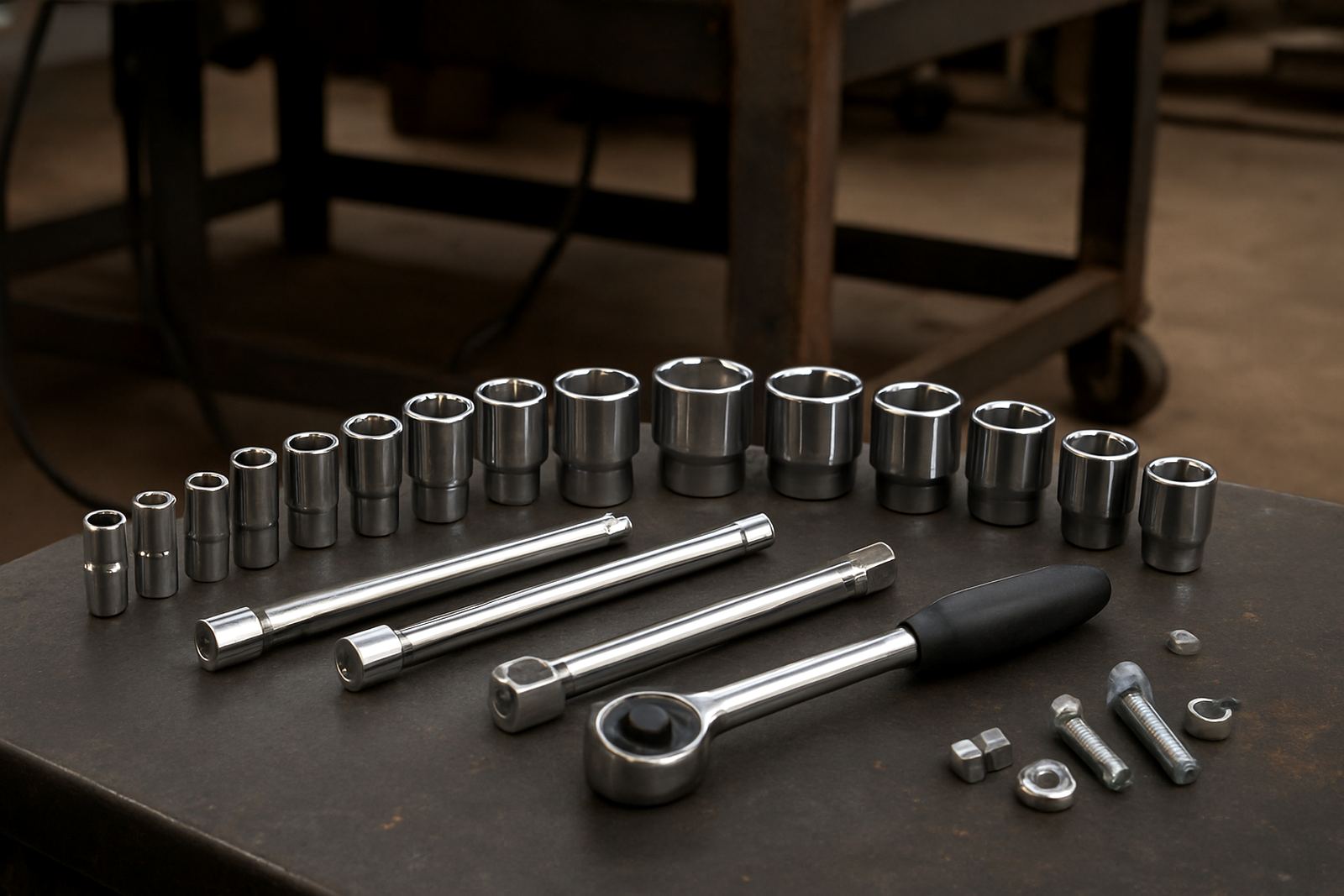
This kit brings together a ratchet handle, matching sockets and the usual adapters or extensions needed for day to day fastening work. It is the kind of set you keep near the bench because it saves time on bolts, nuts, clamps and fittings that come up in automotive repair, plant maintenance and general assembly.
For Pinetown and Westmead workshops, that means less walking around for loose pieces and fewer delays when a job needs the right size now. The kit is also handy for mobile technicians and DIY users who want one organised case instead of a mix of single sockets in different drawers.
- Ratchet drive for quicker tightening and loosening
- Socket sizes for common metric fasteners
- Accessories for awkward access and deeper fasteners
- Carrying case for storage and transport
Sizes, Drive Options And What Usually Comes In The Set
Most socket ratchet kits are built around common drive sizes such as 1/4 inch, 3/8 inch or 1/2 inch. Smaller drives suit lighter fixing work and tighter spaces, while the larger drive is better for wheel nuts, brackets and more demanding workshop tasks. The right choice depends on the type of work you do most often.
Socket sizes are usually arranged in metric steps, with shallow and deep sockets often included in better sets. A useful kit should cover the sizes you reach for most, rather than filling the case with items that never get used. If your workshop deals with mixed vehicles or machinery, ask for a wider spread of sizes so you are not caught short on site.
- Drive sizes: 1/4 inch, 3/8 inch or 1/2 inch depending on use
- Metric sockets for common trade fasteners
- Extension bars for recessed bolts
- Universal joint or wobble accessory for angled access
- Case layout that keeps sizes easy to check at a glance
Where The Kit Suits Best
This type of kit suits automotive bays, fleet workshops, light manufacturing, farm repairs and general property maintenance. It is also useful in small businesses that service equipment in Durban North, Umhlanga and Hillcrest where one set has to handle many different fastening jobs during the day.
In coastal areas, tools can pick up moisture faster, so a tidy case and regular wipe down matters. On inland sites, dust and metal shavings can also build up in the ratchet head and around the socket markings. Keeping the set organised means you can see missing pieces quickly and avoid wasting time hunting for the right one.
- Vehicle servicing and breakdown work
- Plant and machinery maintenance
- General workshop assembly and strip down
- DIY repairs around the home or smallholding
Power, Gas And Setup Needs
A socket ratchet kit does not need power, gas or a fixed installation. That makes it a practical option during load-shedding, on remote jobs and in workshops where compressed air is reserved for other equipment. You can use it straight out of the case, which is useful when a quick hand tool is all you need to keep a job moving.
If you are pairing the kit with power tools, make sure the socket sizes and drive type match your accessories before ordering. Some users prefer to keep the ratchet kit as the backup for detailed work, while the power tools do the faster removal and the ratchet handles the final tightening. That balance often works well in busy trade settings.
- No electricity or air supply required
- No gas, fuel or charging needed
- Useful when power is off or equipment is tied up
- Can support work alongside cordless or air tools
Care, Cleaning And Servicing Tips
Good care keeps a ratchet kit working properly for longer. Wipe sockets after use, remove grit from the ratchet head and return each piece to its marked slot. A light oil on the moving parts helps the mechanism stay smooth, especially in humid Durban conditions where tools can show surface rust if they are left damp.
Do not use a small ratchet to force stuck fasteners that need more leverage. If a bolt is badly seized, use the correct breaker bar or a suitable release method first, then come back with the ratchet for controlled tightening. That approach protects the ratchet internals and saves on replacement costs later on.
- Store in the case when not in use
- Keep away from standing water and wet floors
- Check the square drive and socket ends for wear
- Replace damaged pieces before they slip or round off a fastener
What To Check Before You Order
Before ordering, check the drive size, the socket range and whether you need shallow, deep or both. Also confirm if your work calls for metric only or a mixed selection for older equipment. If the kit is for a specific team, standardising the set across the workshop makes it easier to share parts and keep stock control simple.
Think about the way the kit will be used day to day. A mobile technician may need a compact case with the most common sizes only, while a workshop in New Germany or Westmead may want a fuller set with extra extensions and a stronger storage case. If you are unsure, Jameson Tools can help with tool kit planning and replacement matching so you end up with a set that suits the job, not just the label.
- Confirm drive size and socket range
- Check shallow or deep socket requirements
- Ask about extras such as extensions and adapters
- Match the kit to your common vehicle or machine work
- Order enough sets if more than one technician will use them
Key facts
| Product type | Socket and ratchet fastening kit |
|---|---|
| Typical drive sizes | 1/4 inch, 3/8 inch, or 1/2 inch depending on set |
| Socket range | Common metric sizes for trade fastening work |
| Included accessories | Extensions, adapters, and sometimes universal joint pieces |
| Power requirement | None |
| Best use | Automotive, plant, maintenance, workshop and DIY fastening |