What This Grease Gun Does in Daily Workshop Use
This grease gun is made for routine lubrication on machinery, plant and workshop equipment that needs regular greasing. It helps you apply grease into nipples, bearings, linkages and shafts without making a mess, which matters when you are maintaining compressors, trailers, farm equipment, presses and general trade machinery.
For Pinetown, Westmead and New Germany workshops, it is a sensible add-on for fitment bays, mechanical rooms and maintenance teams that need a reliable tool for weekly service work. It is also useful for mobile technicians and DIY users who want a proper feed rather than trying to push grease in by hand.
- Suitable for preventative maintenance schedules
- Helps reduce wear on moving parts
- Useful for machinery, vehicles and workshop equipment
- Works well in small and medium maintenance teams
Sizes, Feed Types and Hose Options
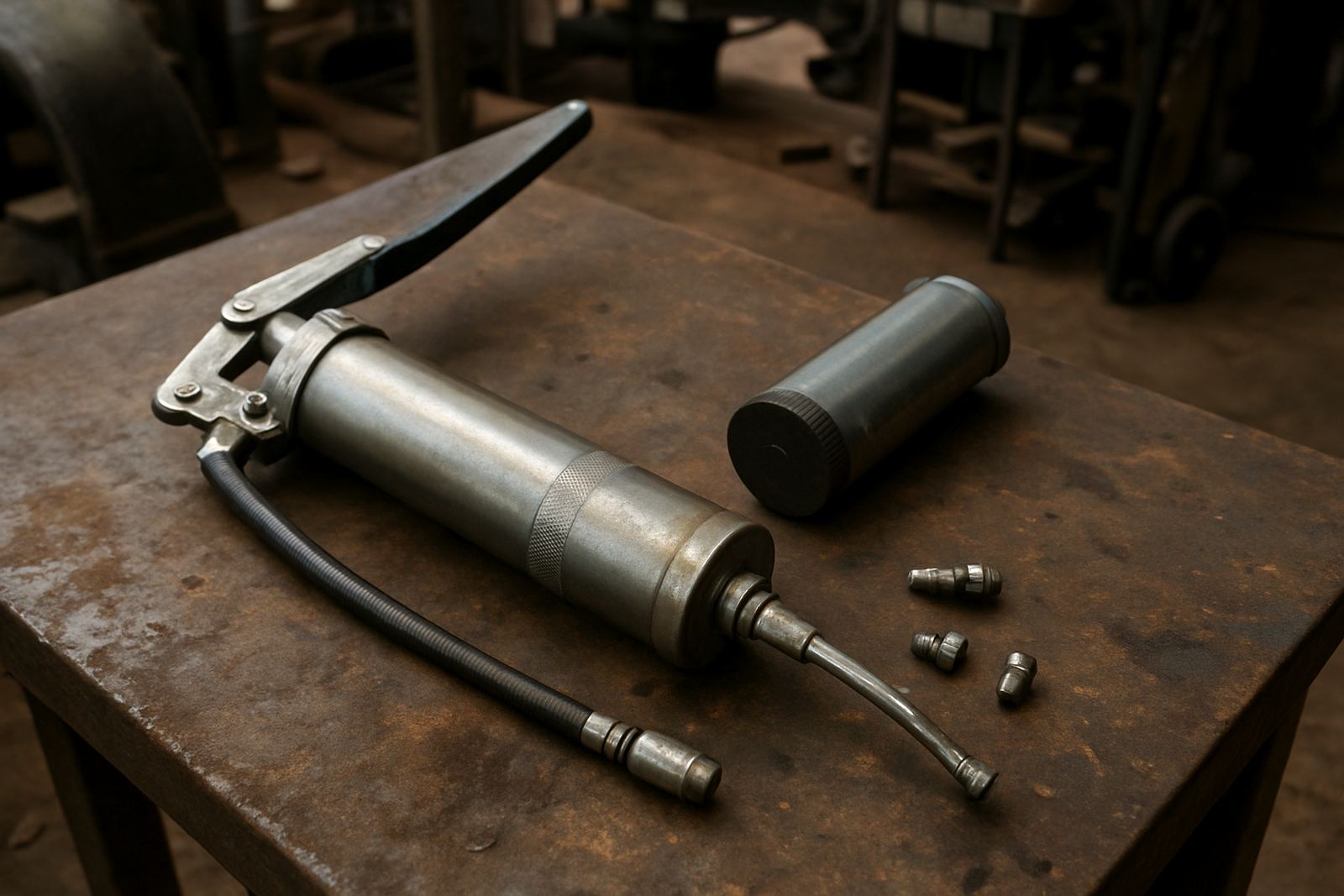
Grease guns are usually chosen by the way you want the grease to feed and how much work they must handle. A compact hand-operated unit is easy to carry and suits lighter maintenance. A larger capacity version is better when one technician services several machines in a day. Some setups use a rigid nozzle, while others use a flexible hose for tight spaces and awkward grease points.
When checking options, think about the type of fittings on your equipment, how often you grease, and whether the gun must fit into a tool kit or a service van. If your team works on heavy equipment or in tighter plant rooms, a hose with a locking coupler can save time and reduce leakage.
- Manual lever feed for controlled application
- Compact handheld size for general service use
- Flexible hose option for hard-to-reach fittings
- Rigid nozzle option for quick straight access
Where It Suits Best in South African Workshops
This product suits mechanical workshops, agricultural maintenance teams, fleet service bays, engineering shops and light industrial sites. It is also practical for builders’ yards, service contractors and DIY users with ride-on mowers, trailers, generators or workshop machines that need scheduled grease points checked.
In coastal areas like Durban and Umhlanga, regular lubrication helps slow down the effects of moisture and salt in the air. Inland, the main benefit is protecting moving parts from dust and heat. If your workshop runs through load-shedding and equipment stands idle for periods, a proper grease routine helps when you bring machines back into service.
We see these go out to Pinetown, Hillcrest, Durban North and further afield on courier, so they are a practical add to stock lists for teams that need one item with many uses.
Power, Gas Needs and Setup on Site
A standard grease gun like this does not need electricity, gas or compressed air, so it is handy during outages and in mobile service work. You only need the correct grease, the right coupler, and enough access to the fitting. That makes it useful for field work, breakdown response and sites where power points are limited or the generator is already tied up.
Setup is straightforward: load the cartridge or fill the barrel, prime the gun if needed, attach the coupler firmly and apply grease slowly. Do not force grease into a fitting that will not take it, because that can damage seals. If the nipple is blocked, clean it first and check the point before continuing.
- No electricity required
- No gas or compressed air needed
- Simple fill, prime and use process
- Good backup tool during load-shedding
Care, Cleaning and Servicing Tips
After use, wipe the nozzle, check the hose and keep the coupler clean so dirt does not get pushed into the machine. A grease gun left with dried residue in the outlet can become hard to prime next time, and that wastes time in the workshop. Store it upright where possible, and keep cartridges or tubs sealed against dust and moisture.
If the trigger, plunger or feed becomes stiff, inspect for air in the barrel, damaged seals or blocked grease. Small maintenance habits extend the life of the tool and keep delivery smooth. In coastal workshops, a quick clean down after the shift helps avoid corrosion on metal parts, especially where humidity is high.
- Wipe after every job
- Store away from dust and water
- Check seals and hose condition regularly
- Keep the correct grease grade on hand
What to Check Before You Order
Before ordering, check the grease type you already use, the fitting size on your equipment and whether you want a compact or higher capacity model. It also helps to know whether your team prefers a flexible hose, a rigid nozzle or a gun that can sit easily in a starter kit or service bag. If the tool will be shared, choose something easy to refill and simple to clean.
We also recommend checking the maintenance list for your machines so you know how many points need greasing each week. That makes it easier to plan spares, cartridges and replacement couplers. If you are setting up a new workshop in Pinetown or standardising tools across several bays, a proper grease gun should match the rest of the stock and not create extra admin.
- Confirm grease type and cartridge size
- Check fitting and coupler compatibility
- Choose hose or rigid nozzle based on access
- Match the tool to your maintenance schedule
Key facts
| Product type | Workshop grease gun for machinery lubrication |
|---|---|
| Use | Preventive maintenance on bearings, joints and grease nipples |
| Power requirement | None, manual operation |
| Options | Compact or higher capacity, hose or rigid nozzle |
| Typical applications | Mechanical workshops, fleet bays, agricultural and light industrial use |
| Courier delivery | Nationwide from Pinetown, Durban |