Why Small Parts Go Missing So Quickly
Washers, circlips, screws, plugs and terminals are easy to misplace because they move through a workshop faster than most other items. One technician borrows a packet, another leaves a tray on the back of a bakkie, and before long nobody can tell how many pieces are left. In a busy Durban workshop that kind of confusion shows up as wasted time, extra courier costs and jobs waiting on a single missing part.
Better storage is not about making the shelf look neat. It is about knowing what you have, where it is, and how fast it must be replaced. When stock is organised correctly, you spend less time opening ten containers to find one seal and more time finishing the job. That matters whether you are fitting out a small workshop in Pinetown or managing a larger bay in Westmead.
Start With Categories That Match Real Workshop Use
Organising parts starts with grouping items the way your team actually works. Do not split stock into fifty vague categories. Keep it simple and useful so staff can find items quickly, even during load-shedding when lighting is poor and everyone is trying to finish before closing time. The best system is the one people will keep using.
- Fasteners: screws, nuts, bolts, washers and anchors
- Electrical items: terminals, cable ties, lugs, fuses and connectors
- Seals and consumables: O-rings, gaskets, clips and tape
- Tool accessories: bits, blades, cutting discs and sanding items
- Job-specific spares: parts kept for common repairs or repeat orders
If your workshop serves coastal customers around Durban North or Umhlanga, keep moisture-sensitive parts separate. Humidity can rust fixings, dull blades and damage packaging. In inland areas around Hillcrest, dust can be just as bad because it gets into open trays and makes stock look old before it is actually used.
Choose Storage That Suits The Size Of The Part
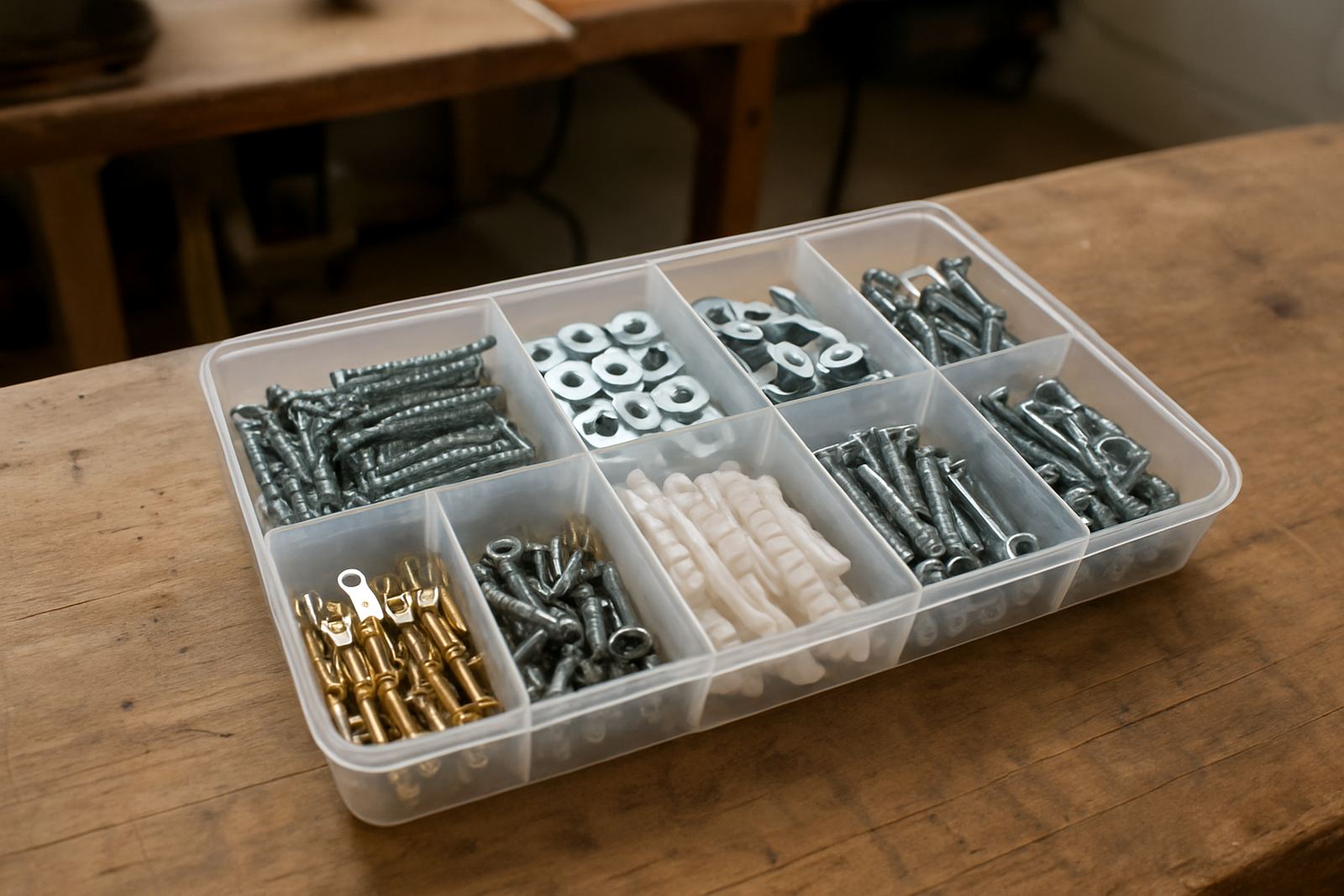
Small parts need containers that match the item. Tiny terminals do not belong in deep boxes where they are lost at the bottom, and large fittings should not be packed into shallow trays that overflow. Use a mix of drawers, compartment bins, clip boxes and lidded tubs so the stock stays visible and protected.
- Clear drawers for frequently used items that need to be seen at a glance
- Compartment bins for mixed fasteners and sorted small fittings
- Lidded tubs for dusty or moisture-prone consumables
- Tray inserts for workbench use during active repairs
- Stackable tubs for overflow stock and seasonal items
For workshops in older industrial spaces around New Germany or Pinetown, make use of vertical storage where floor space is tight. Wall units reduce clutter and keep items off damp concrete floors. If a workshop is near the coast, closed storage also helps protect stock from salty air and corrosion.
Labelling And Stock Counts Need To Be Non-Negotiable
Good labels are part of the system, not an extra. Each container should show the item name, size or spec, and the bin code if you use one. For example, a drawer can be marked with a plain product name and a second line with the size range. That makes reordering easier and helps new staff understand the layout on day one.
Stock counts do not need to be complicated, but they must be regular. A quick weekly check on fast-moving items is better than a full count done once a year. Use a simple receiving and issue record, even if it is just a printed sheet clipped near the supply shelf. If the count does not match reality, the label means very little.
- Check fast-moving items every week
- Review slow-moving items monthly
- Set minimum levels for critical spares
- Record who takes stock and when
In a trade environment, one person’s memory is never enough. A small notebook or stock list on the wall can prevent double ordering and help with trade account support when you need to plan repeat purchases. It also makes handover easier if the usual store person is off sick or on site in another area.
Build The System Around The Jobs You Actually Do
The best storage layout supports your most common repairs and fitting tasks. If your team does a lot of electrical work, keep terminals, heat-shrink and cable management items close together. If you handle machinery repair, group bearings, seals and retaining parts in one zone. The goal is to reduce walking, guessing and repeat checking.
Workshop starter kits are useful here because they show what a sensible base stock list looks like. Once you know the common items, you can plan replenishment around actual demand rather than filling shelves with things that never move. That is especially useful for new workshops in the Durban metro where floor space is limited and every square metre has to earn its keep.
For sites with multiple staff, assign responsibility for each category. One person can oversee fasteners, another can handle electrical consumables and a third can check tool accessories. That does not mean only one person may touch the stock. It simply means someone is accountable for keeping the bay in order.
A Pinetown Example That Shows The Difference
A small workshop in Pinetown was losing time on repeated jobs because fasteners and fittings were kept in mixed boxes on a shared bench. The team knew the parts were somewhere in the room, but they could not find them quickly enough when work picked up after lunch. A full rework of the storage area was not needed, only a cleaner system and better labelling.
We helped them divide stock into clear groups, add bin labels and set minimum levels for the items they used every day. Within a short time the staff were checking stock before jobs started, not after a customer had already arrived. They also cut down on duplicate purchases because everyone could see what was already on hand. It sounds small, but it changed the pace of the whole workshop.
That kind of improvement matters in a trade area where couriers, supplier runs and job deadlines all compete for attention. When parts are organised, the workshop feels calmer and the team can work without constant interruptions. The savings show up in time, order and fewer mistakes.
Keep Small Parts Organised As A Habit, Not A Once-Off Job
Storage only works when the team keeps using it. Set the rule that every part comes back to its assigned place after use. Check labels when containers are refilled. Review the layout after busy seasons, after staff changes, or when you take on new work that uses different consumables. A system that is ignored soon turns back into a pile.
Good organisation is part discipline and part routine. It helps with workshop setup advice, tool kit planning and stock list standardising because everything starts from the same basic principle: know what you have and where it belongs. Once that becomes normal practice, small parts stop causing big delays.
- Return parts to the same bin after every job
- Replace torn labels immediately
- Keep one clean area for incoming stock
- Recheck shelf order after busy periods
- Remove dead stock before it crowds useful items
If your workshop wants steadier replenishment and less loss, small parts are the best place to start. They are cheap on their own, but expensive when they go missing at the wrong time.