Start With the Job, Not the Box Size
Before you buy a drill bit set, match the bits to the work you do every week. A general maintenance workshop in Pinetown will often need a different mix from a fitment team in Umhlanga or a maker space in Hillcrest. If your jobs are mostly fixing brackets, mounting cabinets, drilling pilot holes, or opening up existing holes, you need a set that covers common diameters and standard shank sizes rather than a big box full of duplicates.
Look at the materials you drill most often. Timber and board ask for neat cutting edges. Mild steel needs bits that stay sharp under heat. Brick and concrete need a masonry point that can handle dust and impact. Plastic can crack if the bit is too aggressive, so a steady feed matters more than force. In busy workshops, the right set saves time because the team is not hunting for one missing size at 7am when the courier van is already at the gate.
- List the top 10 drilling tasks from the last month.
- Note the materials involved in each task.
- Check which sizes were borrowed, worn out, or missing.
- Buy for repeat work first, then fill the gaps.
What Should a Useful Drill Bit Set Include?
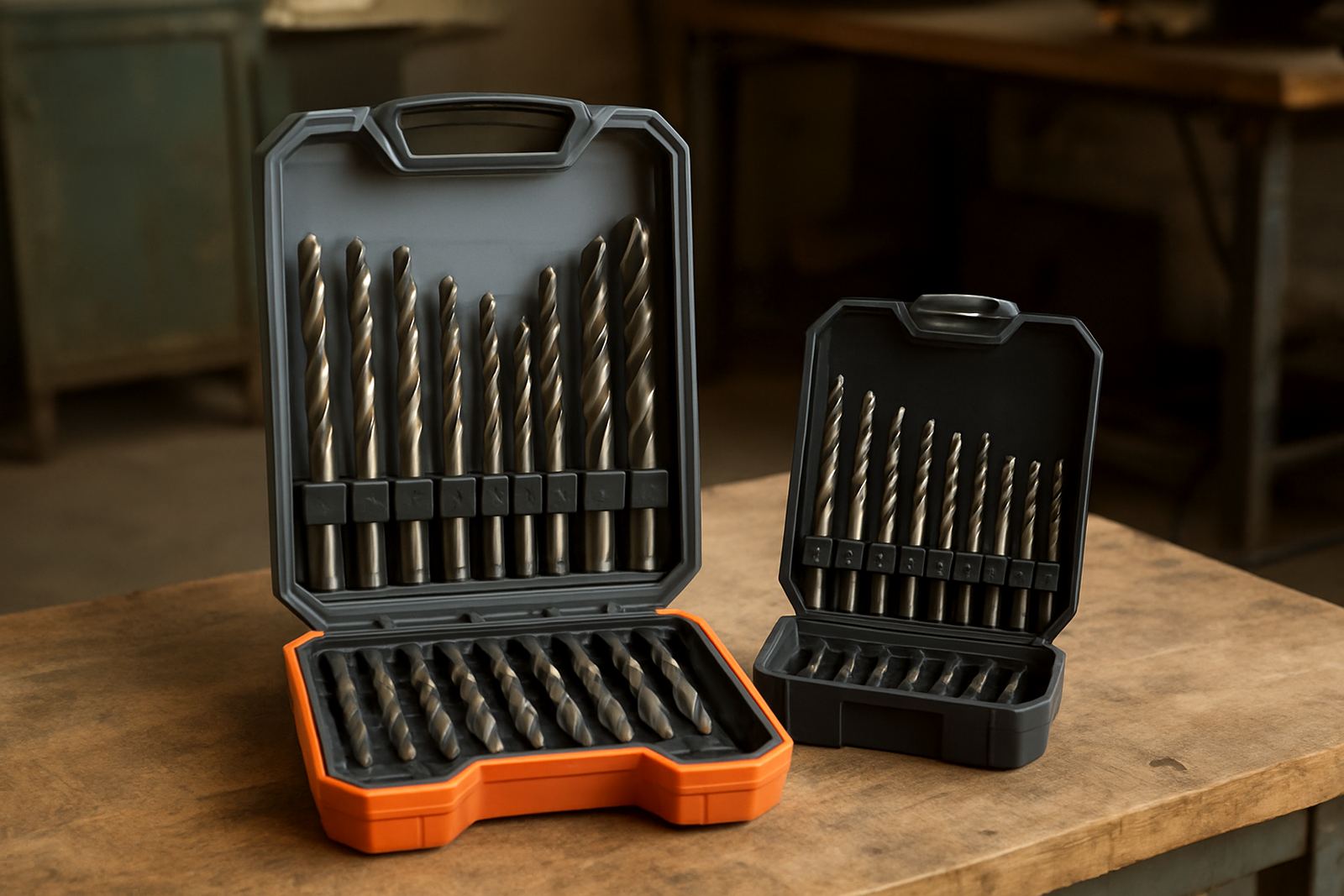
A useful set should give you the everyday sizes first, not just a wide range on paper. For trade use that usually means a solid spread of small, medium, and mid-large diameters that cover pilot holes, fixing holes, clearance holes, and general installation work. If the set is too narrow, crews waste time swapping between partial kits. If it is too broad, you may pay for sizes that sit untouched in the case.
For mixed workshops, it helps to split the set by task. Keep one set for timber and general installation, one for metal work, and one for masonry if your team drills walls, slabs, and blockwork. In coastal areas like Durban North and Umhlanga, storage matters too because humidity can cause light surface corrosion if bits are left loose in a damp toolbox. A proper case, clean compartments, and a quick wipe after use all help extend service life.
- Common sizes for pilot and fixing work.
- A separate range for larger clearance holes.
- Labelled storage for each material type.
- Replacement spaces so missing bits show up quickly.
Know the Materials: HSS, Coated, Masonry and More
Drill bit material affects speed, heat resistance, and how long the edge lasts. High-speed steel bits are a practical choice for general workshop use and light metal work. Coated options can help with heat and wear where the same sizes are used often. For tougher metal jobs, step up carefully because forcing a soft bit through hard plate only burns the edge and leaves a rough hole.
Masonry bits use a harder tip for brick, concrete, and block. They do the job well, but they are not the answer for steel or timber. Timber bits are built to cut cleanly and reduce tearing, which matters on visible finishes and cabinet work. If your team works across fabrication, maintenance, and installations, it is usually better to keep material types separate instead of making everyone use one general bit for every surface. That habit leads to chipped tips and uneven holes very quickly.
Ask yourself how often the bits will be used each week. A set for one handyman on site may last months. A maintenance team in a busy industrial unit in New Germany might wear through smaller sizes much faster, especially where broken fasteners and repeated pilot holes are part of the day.
Check the Shank, Fit and Drill Chuck Compatibility
One of the most common buying mistakes is overlooking the shank. The shank is the end that fits into the drill chuck, and it needs to match your tools. A bit that fits loosely will wobble, drill a poor hole, and can damage the chuck over time. A bit that is too large simply will not fit. This sounds basic but it comes up often in workshop setup calls because different teams carry different drills.
Before ordering, check whether your drills are keyed or keyless, and note the chuck capacity. Also check if your crews use corded drills, cordless drills, impact drivers, or drill presses. Some bits are better suited to one type than another. If your workshop runs through load-shedding and battery drills are carrying the workload, it makes sense to keep a set that balances cut quality with speed and battery life. Slow, steady cutting often gives better results than trying to punch through material too fast.
- Confirm the chuck size on each drill.
- Match the shank to the tool in use.
- Check for wobble before the first job.
- Keep one reference list for the whole workshop.
Storage, Labelling and Corrosion Control in Real Workshops
Good storage is not a nice-to-have. It keeps bits straight, easy to count, and ready for issue. In Pinetown, Westmead, and other busy trade areas, tools are often shared between people on different shifts. A bit case with clear labels cuts down on lost pieces and saves time during stock counts. It also helps when you are replenishing consumables because you can see exactly what needs replacing.
Moisture, dust, and metal swarf all shorten the life of drill bits. After use, wipe them clean and return them to their slots. If the workshop is near the coast or a storeroom is poorly ventilated, add a simple anti-corrosion routine. That can be as practical as keeping the case dry, avoiding open storage near chemical cleaners, and checking for rust before the next issue. If a bit has been chipped or bent, do not put it back into the main set. Separate it and mark it for replacement. It sounds small but it stops damaged bits from being used on a job where accuracy matters.
- Use one case per drill bit type.
- Label sizes clearly in millimetres.
- Keep spare slots open for replacements.
- Remove damaged bits from circulation straight away.
A Simple Buying Checklist for Workshop Teams
If you are buying for a new workshop or refreshing stock, use a checklist and keep it practical. Start with the jobs your team does every day, then check the materials, the drill types, and the storage space you have. For larger sites, it helps to standardise the stock list so every branch is buying the same common sizes. That makes reordering easier and avoids overbuying the same item in different places.
For Durban and nationwide courier delivery, timing matters as much as quantity. If your team is short on a key size, one missing bit can hold up an installation or an afternoon repair run. A good buying plan will include daily-use sizes, one or two backup sets, and a clear replacement cycle. Keep a note of what wears fastest, especially the smaller bits used for pilot holes and repeated maintenance work. Those are often the first to go. If you need help planning a set for a new team or matching replacements to existing stock, get the list right before you place the order, not after the first box arrives.
- What materials are drilled most often?
- Which sizes are used weekly?
- Do the bits match the drills on site?
- How will the set be stored and issued?
- What needs to be replaced within the next 30 days?