Start With the Fasteners You Work On Most
The best spanner set is the one that matches the nuts and bolts you actually see every week. In a South African workshop that may mean a mix of metric sizes for vehicle repairs, general maintenance, fabrication and site work. Before buying, check the common sizes used on your jobs and in your stock rooms, because a set with the right spread is worth more than one with a lot of sizes you will never touch.
Start with the usual small, medium and larger sizes that come up on plant, trailers, steelwork and equipment maintenance. If your team handles both older and newer machinery, it helps to have a set that covers the frequent sizes with a few extras around the edges. For trade use, missing one key size can slow down an entire callout.
- List the fasteners you use most in the workshop or on site
- Check whether your fittings are metric only or a mix of size types
- Include a few larger sizes for maintenance and assembly work
- Keep one backup set for mobile jobs and one for the main bench
Choose the Finish That Fits Your Conditions
Finish matters because the tool has to survive real workshop conditions. In coastal areas like Durban and Umhlanga, humidity can lead to surface marking if tools are left in damp drawers or on open racks. In a busy inland workshop, dust, oil and repeated handling can be just as hard on the set. Look for a finish that is easy to wipe clean and that resists everyday wear.
For work on vehicles or machinery, a smoother finish is often easier to keep clean after contact with grease. If your team stores tools in a van, container or shared storeroom, the finish should handle frequent movement and not mark up too quickly. A decent finish will not stop bad storage, but it does help the set last longer. A bit of care goes a long way, even when the day is hectic.
- Check how the tools feel in the hand when oily or dusty
- Prefer finishes that wipe down quickly after use
- Consider corrosion resistance if you work near the coast
- Inspect for clear size markings that remain visible over time
Match the Storage to the Way Your Team Works
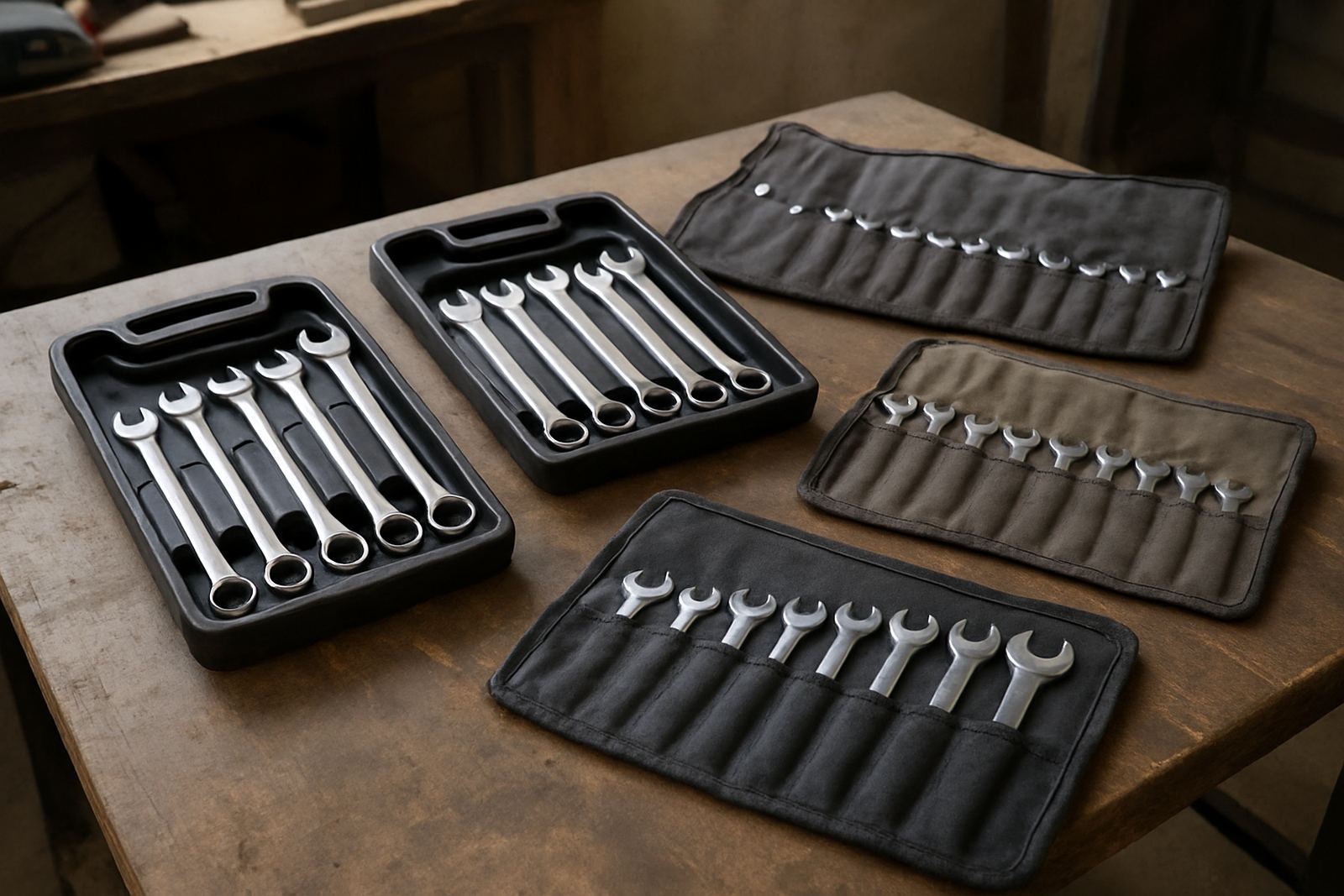
Storage is often ignored until a set goes missing or mixed up. A good spanner set should have a holder, tray or pouch that keeps sizes in order and makes it obvious when something is missing. In a shared workshop this saves time during end-of-day pack-up and helps with stock control. It also reduces the chance of a size being left on a job and forgotten.
If you run mobile teams or do site work in Pinetown, New Germany or further out into KwaZulu-Natal, choose storage that travels well and closes securely. For stationary benches, a tray system may be easier to keep neat. If load-shedding affects your workshop routines, simple organisation matters even more because staff will not waste time searching for the next size when the light is low.
- Pick a holder that keeps every size in place
- Check that the set stays closed during transport
- Make sure sizes are clearly marked for quick selection
- Choose storage that suits benches, drawers or tool bags
Think About Workshop Suitability Before You Buy
Not every spanner set is meant for the same job. A workshop that handles light repairs has different needs to a fabrication shop, service bay or maintenance crew. Think about how often the set will be used, who will use it and whether it needs to move between benches, vehicles and site boxes. A set that is comfortable for daily trade use will usually pay for itself sooner than a cheap set that wears out fast.
For training workshops and starter bays, choose a range that helps new staff work confidently without having to borrow sizes all the time. For experienced teams, a tighter set with the most used sizes may be better if you already have backup stock. Tool replacement planning also matters, because once a spanner goes missing or rounds off, work slows down and tempers rise.
- Use heavy duty sets for daily trade work and callouts
- Select lighter starter sets for apprentices and training bays
- Keep duplicates of the most used sizes in busy departments
- Review your set against the jobs done in the last 30 days
Buy the Right Size Range the First Time
A common mistake is buying too narrow a set, then spending more later to fill gaps. A better approach is to map the size range against your real work and your team size. If several people share one set, gaps are more disruptive. If one technician carries a kit, a focused range can be enough as long as it matches the equipment on site. Do the count before you order and you will avoid costly repeat purchases.
Look out for sets that jump too far between sizes, as that can leave you stuck on a fastener that is almost but not quite covered. In Durban workshops with mixed repair work, that missing size can mean a second trip to the store room or a delay on the job. It is better to have a sensible spread than to chase every size you might possibly need.
- Check the exact range on the pack, not just the number of pieces
- Look for even spacing across the set
- Choose the range that suits your most common fasteners first
- Add extras only where your work actually needs them
Simple Buying Checklist for Trade and DIY Users
Whether you are buying for a home garage in Hillcrest or a busy trade counter in Westmead, a short checklist helps you compare sets properly. Keep the focus on practical use, storage and after-sales support. If you need help matching a replacement set or building a starter kit, it is worth speaking to someone who understands workshop use rather than just reading the label. That saves time and a fair bit of frustration.
Jameson Tools supports workshops across Pinetown, Durban North, Umhlanga and nationwide courier delivery, with planning help for tool kits, consumables and set standardising. If you are updating a stock list or setting up a new bay, ask for advice before you place the order. A well chosen set lasts longer, gets used more and keeps the team moving, which is what matters at the end of the day.
- Confirm the sizes you need most
- Check the finish for your working conditions
- Choose storage that suits your workshop layout
- Match the set to daily trade work or DIY use
- Plan for replacements, spares and stock control