Mobile Technicians Need Kits That Move With The Job
When a technician spends the week moving between depots, shops, factories, estates and private homes, the kit has to be simple to carry and quick to check. A good setup keeps the most used items within reach, protects small parts from going missing, and leaves enough space for the odd extra fitting or connector picked up on the road.
For teams based in Pinetown, New Germany, Westmead, Hillcrest, Durban North and Umhlanga, weather matters too. Coastal humidity can rust cheap fittings and dusty vehicle storage can wear labels off fast. That means sealed boxes, sorted trays, clear marking and tools that can handle daily loading and unloading without constant replacement.
The aim is not to carry everything. It is to carry the right set for 80% of the calls, then top up from stock as needed. That approach keeps weight down and helps technicians finish more work in a day, especially when load-shedding or traffic already eats into the schedule.
A Practical Kit Set For Mobile Service Work
A mobile technician kit usually starts with hand tools, compact power-tool accessories and a few field spares. Most teams need a mix of drivers, spanners, pliers, cutters, a measuring tape, a torch, inspection mirrors, hex and Torx bits, sockets, cable ties, insulation tape and consumables for quick repairs.
For electrical, HVAC, security, refrigeration, building maintenance and general repair work, the carry list changes a bit, but the logic stays the same. Keep the most common items in one top tray or pouch, the second-line items in a deeper case, and the rarely used tools in a back-up crate left in the vehicle or store room.
- Hand tools for stripping, fastening and trimming
- Bit sets and socket sets in compact organisers
- Measuring and marking tools, plus a torch
- Consumables such as screws, ties, tape and small fittings
- Portable storage that can be locked or strapped down in a van
Where the work includes on-site diagnostics, the kit should also make room for test equipment, batteries, chargers and spare leads. With cable routing, mounting and small installation jobs, a technician often needs a very specific item at short notice, so the system must be easy enough for another person to follow if the main tech is off sick or on leave.
How To Lay Out A Vehicle Or Carry Case
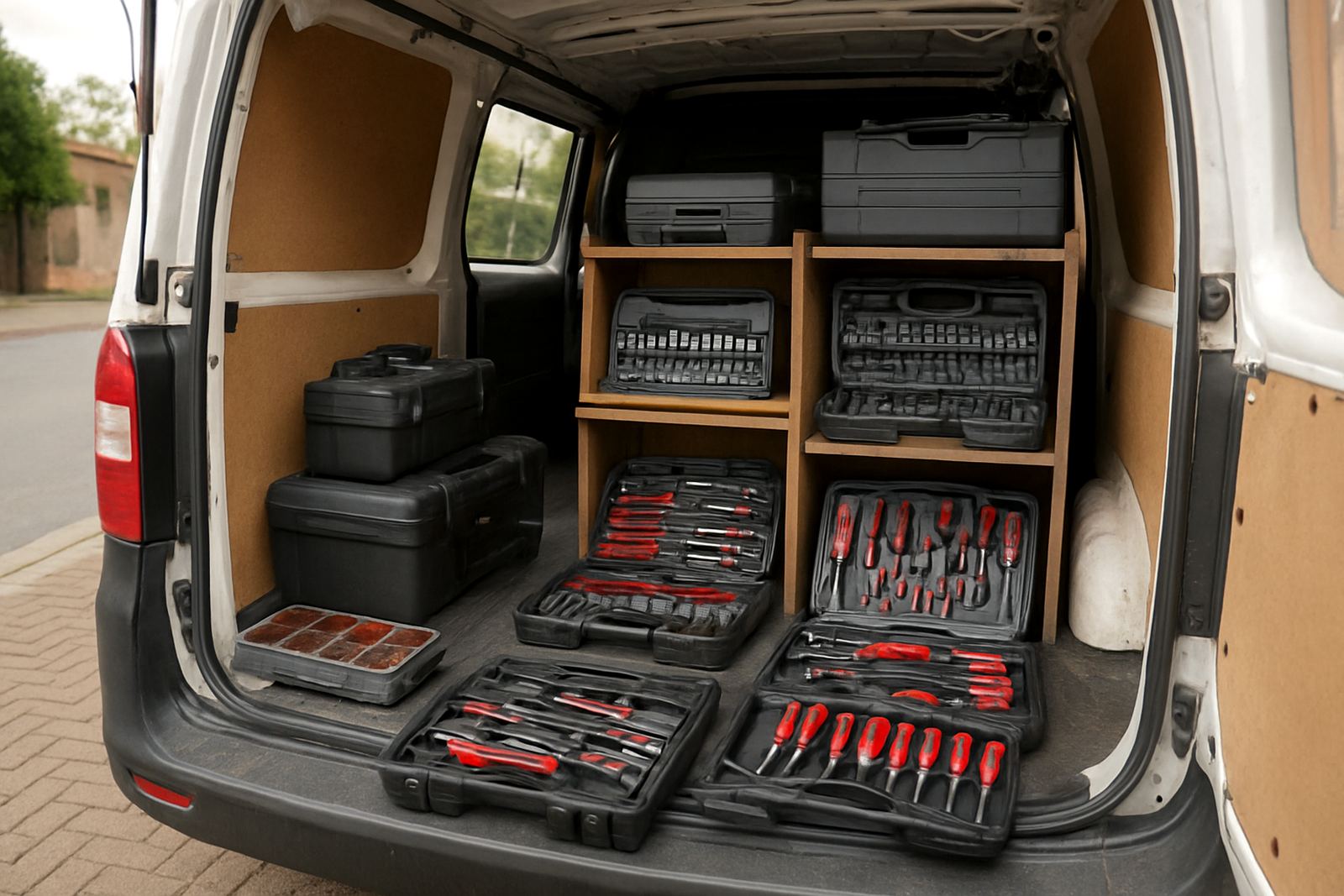
Good layout is usually worth more than buying extra tools. A technician who can open one case and find the correct driver or fitting in seconds will waste less time at the back of a bakkie or on a customer driveway. That matters when a call-out runs late or a site only gives you a short access window.
We normally suggest three levels of storage. First is the daily carry case with the core tools. Second is the vehicle bin or drawer system with repeat consumables and back-up items. Third is the replenishment box at the workshop where stock is counted, cleaned and packed for the next round. This keeps the working set neat and lets the office see what goes out and what must come back.
Labels should be simple. Use size, function and count where possible. If your team has multiple technicians, standardise the same compartments across all vehicles so parts can be swapped without confusion. That is especially useful when one technician has to cover another route at short notice.
- Group tools by task, not by how they were bought
- Keep spare fasteners and fittings in small lidded trays
- Use colour marks or printed labels for quick returns
- Fix cases and drawers so they do not move while driving
- Leave a little empty space for the unexpected item
Common Mistakes That Slow Field Teams Down
One of the biggest mistakes is overpacking. If the case is too heavy, technicians start leaving it at home or in the vehicle and then do repairs with the wrong tool. Another common problem is mixing good stock with old, damaged items, which makes the kit look complete when it is not.
Teams also lose time when consumables are not standardised. If one van carries three sizes of cable ties and another carries five, the replenishment process becomes messy very quickly. The same applies to fasteners, blades, drill bits and sockets. Keep the list tight and decide what the standard issue is for each type of job.
A final issue is poor charging discipline. In mobile work, dead batteries and missing chargers can stop a job just as surely as a broken spanner. Build a daily check into the end-of-shift routine and make sure the kit includes a clear place for batteries, leads and power accessories.
Budget Ranges For Starter And Multi-Vehicle Teams
For a single mobile technician, a practical starter setup can begin at around R2 500 to R6 000 for core hand tools, storage and basic consumables. If the work is more technical, such as electrical service, refrigeration support or security installations, the first kit often lands between R6 500 and R15 000 depending on the testing gear and the level of spares carried.
For a small team running two to five vehicles, the more useful conversation is not just price per kit but cost per productive call. Standardising the layout and stock list can reduce repeat purchases and cut the time spent searching for parts. In many cases the better spend is a well planned storage system and a replenishment schedule, not more tools that sit unused.
Where teams work across Durban and surrounding areas, courier delivery can help fill urgent gaps fast and keep vehicles moving. Jameson Tools also supports tool kit planning, starter kit bundling, consumables replenishment and trade account support so your workshop can keep the field team ready without over-ordering.
Support For Busy Technicians Across KZN And Beyond
Some mobile teams only need a few extra items each month. Others are setting up a new route, opening a second vehicle or replacing a worn kit that has been patched too many times. In both cases, the right support is the same: a sensible stock list, a storage plan that suits the vehicle and a clear process for replacing lost or damaged items.
Based in Pinetown, Jameson Tools works with technicians and workshop managers across Durban, the upper highway area and nationwide by courier. If you need a kit built from scratch or want to standardise what each technician carries, we can help plan it properly and keep the order list practical from the start.
That means less clutter, fewer missing items, and a field team that can get from one site to the next with confidence. For a mobile technician, that is often the difference between a day that runs smoothly and one that turns into a scramble.