What A Metal File Set Does In Daily Trade Work
A metal file set gives you the control to take sharp edges off cut steel, square up small parts, smooth weld spatter and tidy drilled openings. It is one of those hand tool sets that gets used often because it solves small problems quickly, without needing power or air.
For general workshop use, a good file set helps when you are working with mild steel, aluminium, brass and other common metals. It is also useful for fitting jobs where a cut piece is just a touch too tight. A file can remove material a little at a time, which is safer than taking off too much in one pass.
In Pinetown, Westmead, New Germany and the wider Durban area, file sets are common in fabrication shops, maintenance teams, plant rooms and home garages. They are useful during load-shedding too because they do not rely on power, so the work can carry on when the lights go off.
Set Sizes, Cut Types And File Shapes
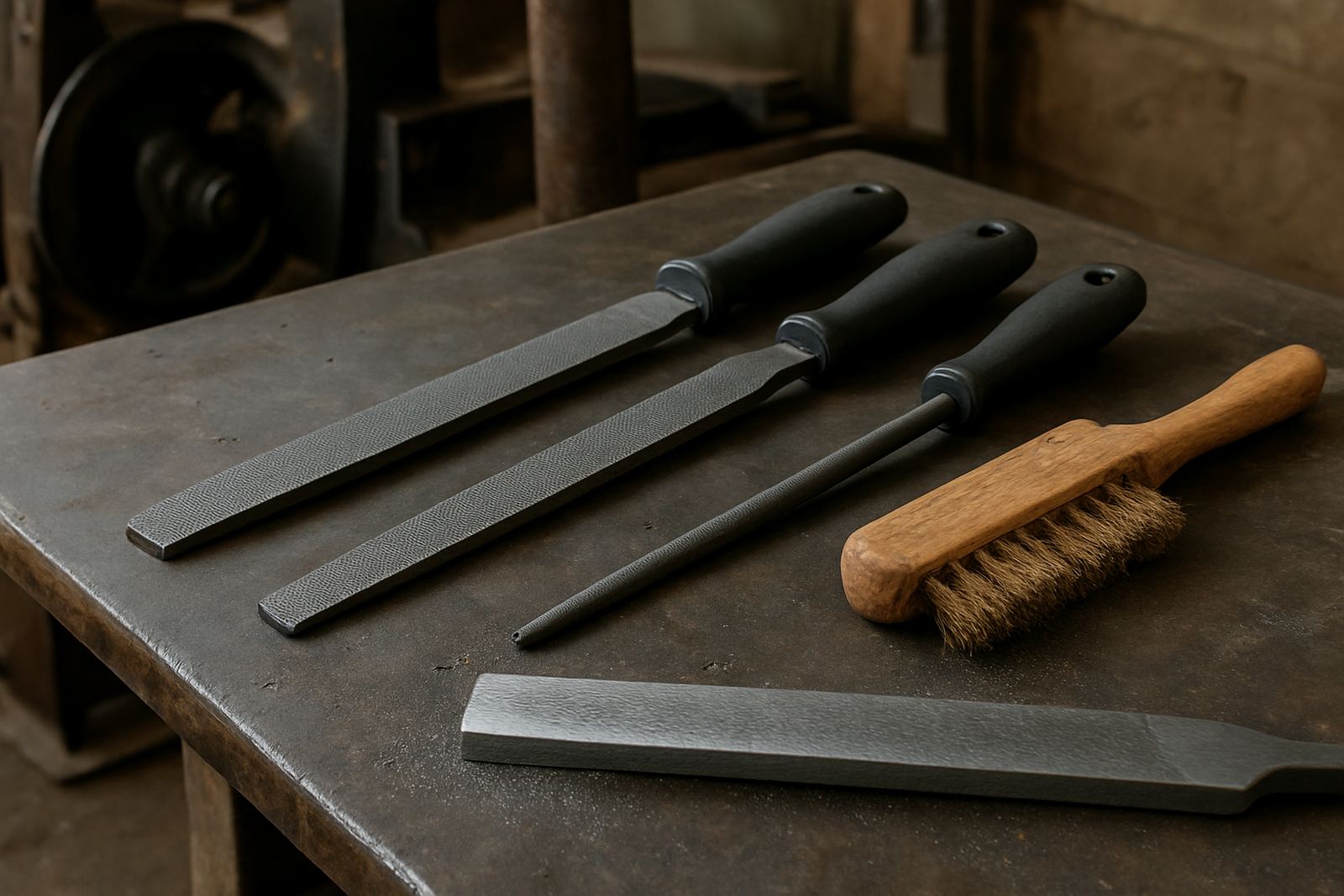
Metal file sets are usually supplied in a mixed group of shapes so you can handle flat surfaces, corners, curves and narrow slots. The exact contents may vary, but a practical set often includes flat, half-round, round, square and triangular profiles. Some sets also include a needle file selection for finer work.
Cut type matters because it affects how fast the file removes material and how smooth the finish will be. A single-cut file is generally better for finer finishing, while a double-cut file removes material faster. Bastard cut, second cut and smooth cut files each serve a different stage of the job.
- Flat file for general edge finishing and surface levelling
- Half-round file for curved surfaces and inside corners
- Round file for holes, slots and radiused openings
- Triangular file for angles, V-grooves and sharp internal corners
- Square file for keyways, square holes and straight internal edges
Files are normally measured by length, with common workshop sizes around 150 mm, 200 mm and 250 mm. Larger files remove material faster, while shorter files offer better control for smaller parts.
Where This File Set Suits Best
This kind of set suits metal workshops, mechanical repair bays, builders who do light fabrication, trailer repair shops, maintenance teams and serious DIY users. It is especially handy where cut edges must be dressed before assembly, coating or handing a part over to a customer.
It also suits workshop starter kits for young technicians, apprentices and small businesses setting up their first bench. If you are building a parts counter or maintenance trolley, a file set should sit close to the vice, calipers, hacksaw blades and marking tools.
- Fabrication and welding finishing
- Automotive trim and bracket adjustment
- General maintenance and repair work
- DIY metalwork at home
- Training rooms and apprenticeship bays
In coastal areas like Durban North and Umhlanga, tools should be kept dry because humidity can mark the steel if they are left in the open. A little care goes a long way, and that matters when a set is shared across a busy workshop.
Power, Gas And Installation Requirements
A metal file set does not need installation, electricity or gas. That makes it easy to keep on hand for quick jobs, mobile work and emergency repairs. You only need a safe work surface, a solid vice where possible and enough space to hold the part firmly.
For best use, clamp the work piece before filing. A loose part will chatter and may leave a poor finish. On sharp edges, use steady strokes and let the file do the work. Do not force it. Pushing too hard can clog the teeth or leave a rough line that takes longer to clean up.
If the job site has poor power supply or frequent load-shedding, a file set remains useful when grinders, sanders or small compressors are unavailable. It is a simple backup tool that still gets the task done, no fuss.
Care, Cleaning And Servicing Between Jobs
Files last longer when they are kept clean and stored correctly. After use, tap out filings and brush the teeth with a file card or stiff brass brush. Do not knock files against each other in a drawer because the teeth can chip. That is one of the quickest ways to shorten the life of the set.
Keep files dry and lightly protected against rust. In humid areas and near the coast, wipe them down before storage. A thin coat of light oil can help, but avoid over-oiling because that can trap dirt and reduce cutting action. If a file starts to skate across the metal, it may be clogged and needs cleaning.
- Store each file separately or in a roll
- Do not use a file without a proper handle
- Clean teeth regularly to prevent clogging
- Keep away from moisture and grit
- Replace damaged or badly worn files when cutting becomes uneven
If the handle is loose, fit it properly before use. A bare tang can slip and cause injury, which is not worth the risk on a busy floor.
What To Check Before You Order
When ordering a metal file set, check the number of pieces, the file lengths, the cut type and the shapes included. Also confirm whether the set includes handles or if they need to be ordered separately. For trade use, a set with mixed shapes is usually more practical than one that repeats the same file style.
Think about the work you do most often. If you are doing bracket making and light fabrication, flat and half-round files matter most. If you are working on holes, slots and fine adjustment, round, square and triangular files are worth having. For precision fitting, a smaller needle file set may also help.
It is worth checking how the files are packed for delivery as well, especially if they will travel by courier to Durban, Johannesburg, Cape Town, Pietermaritzburg or smaller towns. Secure packaging helps prevent tooth damage before the set even reaches the bench.
- File shapes included in the set
- Length of each file, for example 150 mm or 200 mm
- Cut type and aggressiveness
- Whether handles are included
- Packaging suitable for courier transport
If you are building a new workshop or refreshing stock, file sets are a smart item to standardise across the team. That makes replacement easier and keeps the right tool within reach when a cut edge needs sorting fast.
Key facts
| Product type | Metal file set for deburring, shaping and edge cleaning |
|---|---|
| Common file lengths | 150 mm, 200 mm, 250 mm |
| Typical shapes | Flat, half-round, round, square, triangular |
| Cut types | Single-cut, double-cut, bastard, second cut, smooth |
| Primary use | Removing burrs and refining cut metal edges |
| Power or gas needed | None |